Beyond the Third Neighbor: Mongolia-US Ties in an Era of Great Power Competition
U.S. Ambassador Richard L. Buangan talks to The Diplomat about the future of the partnership.
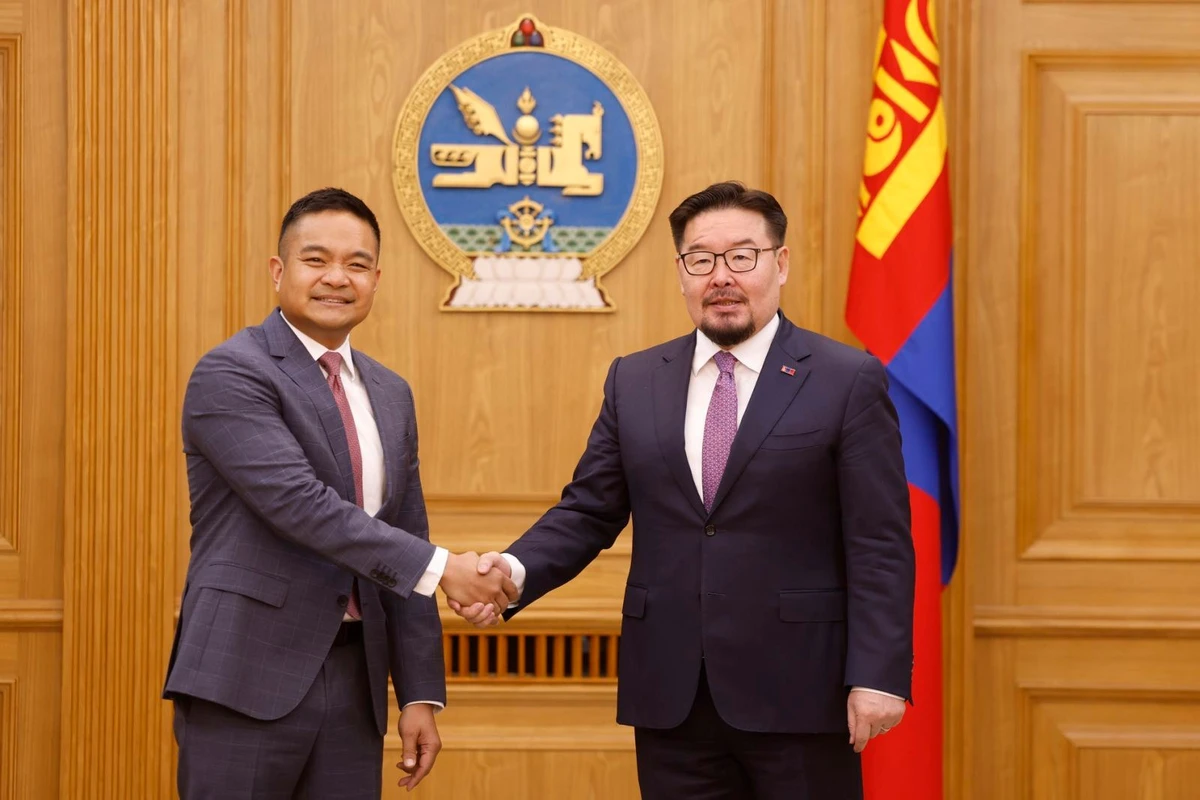
On January 27, the United States and Mongolia marked the 39th anniversary of diplomatic relations, which were first established in 1987 amid the waning years of the Cold War. For nearly four decades, this bilateral bond has served as the cornerstone of Mongolia’s landmark “Third Neighbor” doctrine – a deliberate, sovereignty-centered strategy to diversify its foreign relations beyond its two immediate neighbors, Russia and China.
Today, against the backdrop of intensifying great power competition, Washington’s ongoing reorientation of its Indo-Pacific strategy, and the second Trump administration’s “America First” foreign policy (enshrined in the December 2025 National Security Strategy, and centered on focused, results-oriented diplomacy), the Mongolia-U.S. strategic partnership stands at a defining inflection point.
This inflection point was sharply defined by a landmark diplomatic move just days before the anniversary. On January 22, Mongolia’s Prime Minister Gombojavyn Zandanshatar signed the Charter of the Board of Peace in Davos, Switzerland, formalizing Mongolia’s status as a founding member of the Trump-led international body. The move marks the most significant update to Mongolia’s “Third Neighbor” playbook in years. It comes as the United Nations Mission in South Sudan (UNMISS) – a core pillar of Mongolia’s global peacekeeping engagement – is set to wind down in April 2026. The Board of Peace could see a role for Mongolian peacekeepers in Gaza.
But not all is rosy in Mongolia-U.S. relations. On February 2, the United States suspended immigrant visas for Mongolian citizens, including it in a list “high-risk countries” whose nationals are supposedly prone to “unlawfully utilize welfare in the United States or become a public charge.” The move strained bilateral ties.
Seven years after Mongolia and the United States upgraded their bilateral relations to a formal Strategic Partnership in 2019, pivotal questions persist regarding the depth and tangible impact of this collaboration. Has it moved beyond diplomatic pronouncements, symbolic aid, and cultural exchanges to emerge as a resilient, mutually beneficial framework that meaningfully addresses Mongolia’s core national challenges – among them energy insecurity, economic diversification away from extractive industries, and key governance imperatives?
Against the backdrop of evolving great power dynamics, China and Russia are deepening their economic engagement with Mongolia, epitomized by two high-profile diplomatic missions in February 2026. Chinese Vice Foreign Minister Sun Weidong visited Ulaanbaatar to reaffirm Beijing’s longstanding policy priorities for Mongolia, while Mongolian Parliament Speaker Uchral Nyam-Osor undertook a concurrent working visit to Moscow focused on advancing energy cooperation and expanding bilateral economic ties.
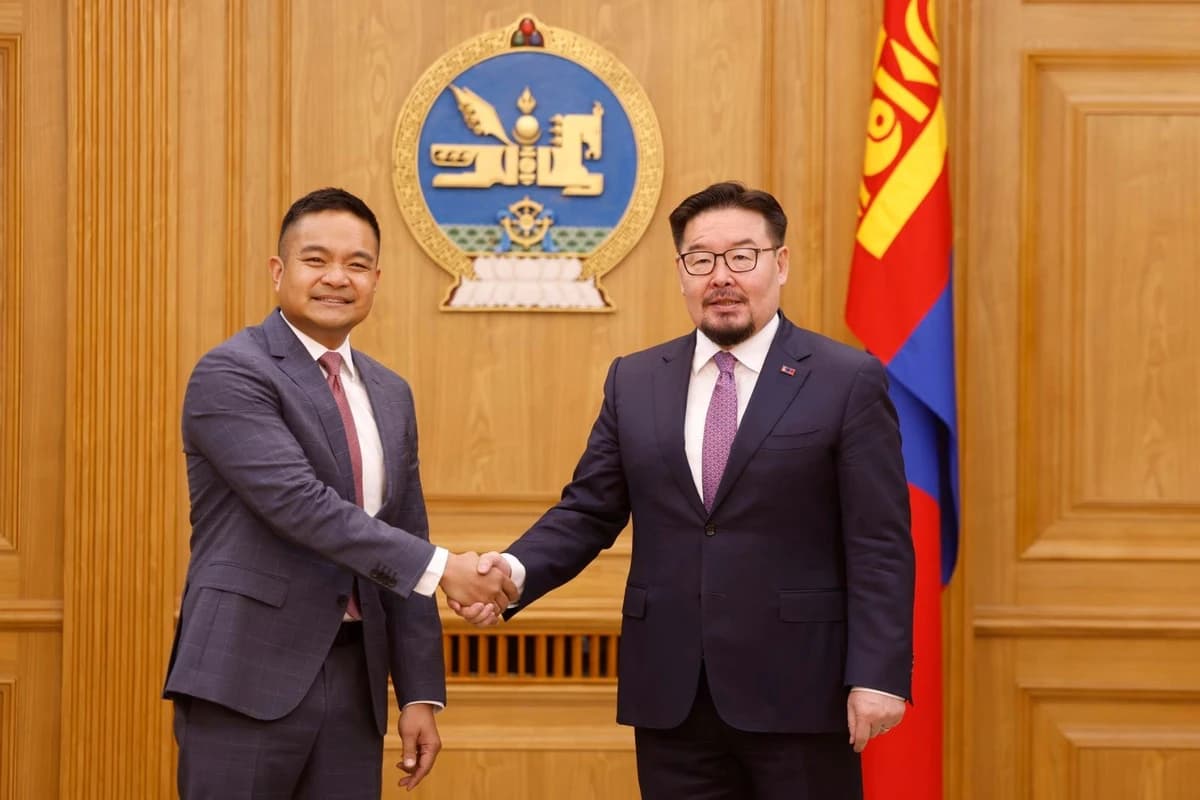
To unpack these developments and the implications for the future of the Mongolia-U.S. bilateral relationship, I conducted an exclusive interview with Richard L. Buangan, the U.S. ambassador to Mongolia since November 2022.
A career Senior Foreign Service officer with deep, on-the-ground East Asian expertise, Buangan’s nearly three-year tenure spanned the final chapter of the Biden presidency, marked by then-Secretary of State Antony Blinken’s historic August 2024 visit to Mongolia (the first by a U.S. secretary of state in a decade), and the opening months of Trump’s second term, which saw Ulaanbaatar join the Board of Peace as a founding member.
Buangan has centered grassroots, community-focused diplomacy throughout his time in Mongolia: he has studied traditional Mongolian script, participated in iconic cultural festivals including Naadam and Tsagaan Sar wearing the traditional Mongolian deel, and traveled extensively across the country’s rural aimags to engage directly with local communities. He has described Mongolians as “warm, hospitable, and direct” – qualities, he says, that align with the best of American straightforwardness. Beyond this genuine personal rapport, his insights on Mongolia-U.S. reveal a partnership with tangible, meaningful wins in defense, development, and education, yet one that still faces steep structural hurdles to deliver on its full economic and strategic potential for both nations.
Anniversary Milestones
Buangan opened our discussion by framing 2026 as an “extraordinary year” for both nations, tying the 39th diplomatic anniversary to two historic national commemorations: the United States’ 250th independence anniversary, branded “Freedom 250,” and the 820th anniversary of the founding of the Mongol Empire. “These are two monumental milestones, and we have a lot planned,” he said. “I look forward to collaborating with our Mongolian partners to honor these two significant anniversaries and highlight the enduring partnership between our two nations.”
While symbolic anniversaries set the stage for deeper collaboration, Buangan centered the tangible investments that have defined the bilateral relationship in recent years. The crown jewel of this cooperation is the $462 million Millennium Challenge Corporation (MCC) Water Compact, scheduled for completion in March 2026. The project, which includes a $112 million co-investment from the Government of Mongolia, will increase Ulaanbaatar’s clean water supply by up to 80 percent, directly addressing a chronic crisis driven by explosive rural-to-urban migration in the Mongolian capital.
“That’s a physical symbol of America’s long-term commitment to the U.S.-Mongolia partnership,” Buangan emphasized, noting that the compact embodies the Trump administration’s focus on fostering recipient country self-reliance through durable, sustainable development.
This landmark project is complemented by forward-looking initiatives to expand Mongolia’s global economic connectivity. In February 2026, the U.S. Trade and Development Agency (USTDA) signed an agreement with Mongolia’s Civil Aviation Authority to fund technical assistance supporting Mongolia’s pursuit of a U.S. Federal Aviation Administration Category 1 (CAT 1) safety rating. In its press release, the USTDA highlighted this as a game-changing initiative: “Achieving CAT 1 status will not only enable direct, secure air links between our two countries, it will also facilitate the export of Mongolia’s rare earth oxides and critical minerals, opening new global markets for Mongolian goods while strengthening supply chain resilience for both our nations.”
The Strategic Partnership at Seven
Seven years into the Mongolia-U.S. Strategic Partnership, Buangan offered a clear-eyed assessment of its achievements, rooted in the United States’ identity as Mongolia’s most consistent “Third Neighbor.” “Despite the geographical distance between our countries, the United States is proud to be Mongolia’s ‘’Third Neighbor,’ and it’s a commitment we take seriously,” he said. Buangan described three core pillars of measurable progress that have strengthened the partnership amid shifting global dynamics.
First, defense and security cooperation has emerged as a bedrock of the relationship, aligned with both Mongolia’s constitutionally enshrined neutral foreign policy and U.S. Indo-Pacific security priorities. Buangan highlighted the annual Khaan Quest multilateral peacekeeping exercises, co-hosted with U.S. Army Pacific, which brought together 24 nations in 2025 to strengthen multinational interoperability and humanitarian response capabilities.
“We’ve maintained close defense cooperation, helping to modernize and professionalize the Mongolian Armed Forces, and the results speak for themselves,” Buangan said.
Mongolia is now one of the top per capita contributors to U.N. peacekeeping operations globally, with more than 23,000 troops deployed to missions in South Sudan, the Central African Republic, Afghanistan, Iraq and other global hotspots – a track record Buangan called a testament to Mongolia’s role as a responsible global stakeholder and trusted U.S. security partner.
Second, educational and people-to-people ties have created an enduring foundation for the Mongolia-U.S. partnership, one that transcends political cycles and geopolitical shifts. On this topic, Buangan’s enthusiasm shone brightest, framing these bonds as the unshakable core of the bilateral relationship. “This is one of my favorite topics because I genuinely believe that people-to-people ties are the foundation of everything else we do,” he said. “You can have all the government agreements in the world, but if people don’t know each other, don’t understand each other, don’t have relationships with each other, those agreements are just paper.”
Citing IIE Open Doors data, he noted that roughly 1,500 Mongolian students study in the United States each year, compared with around 100 Americans in Mongolia, while approximately 10,000 travelers move in each direction annually. The U.S. Peace Corps program embodies this grassroots connection: nearly 1,500 volunteers have served across Mongolia since 1991, with 50 currently deployed working alongside local communities.
Over 39 years, more than 8,000 Mongolians have participated in U.S. government-sponsored exchange programs, creating a cross-generational network of bilateral ties. Last year saw the launch of the Center of Excellence for English Language Teaching at the National University of Mongolia, building on an initiative announced by Blinken in 2024.
Still, structural imbalances persist. The new visa constraints under the Trump administration could complicate two-way mobility, even as U.S. development assistance increasingly emphasizes sustainability and recipient self-reliance, which may place natural limits on the scale of broader people-to-people programming.
Third, the two nations have deepened cooperation on economic diversification and critical minerals, a priority aligned with both the 2025 U.S. NSS and Mongolia’s core domestic development goals. Buangan noted that Mongolia’s vast reserves of critical minerals – including copper, lithium, and rare earth elements, all featured on the U.S. Geological Survey’s 2025 expanded list of 60 critical minerals – present enormous potential for mutually beneficial investment.
He pointed to two recent developments as evidence of deepening strategic alignment: Mongolia’s participation in the February 2026 U.S.-hosted Critical Minerals Ministerial, where Foreign Minister Battsetseg Batmunkh joined 53 other nations to advance collaborative supply chain action, and Mongolia’s decision to join the Board of Peace.
Buangan was unequivocal in welcoming Mongolia’s participation in the latter, which he called a “historic initiative”: “Congratulations to Prime Minister Zandanshatar, and we express our gratitude to Mongolia for becoming a founding member of the Board of Peace.”
Mongolia’s official government resolution framed its membership in the Board of Peace as fully consistent with its “peace-centered, open, independent, and multipillar foreign policy,” emphasizing that the body is not a military alliance, but a voluntary cooperation platform centered on respect for national sovereignty. Mongolia also stressed that its three-year initial membership term carries no mandatory financial obligations; the $1 billion threshold referenced in the charter applies only to membership renewal, not initial participation.
Buangan echoed this framing, noting that the initiative offers Mongolia a new avenue to amplify its voice on the global stage as a mid-sized, neutral nation, while deepening its “Third Neighbor” partnership with the United States.
“America First,” Sovereignty, and Reform Collaboration
A central focus of our conversation was the 2025 U.S. National Security Strategy, and what its core “America First” framework means for the future of Mongolia-U.S. relations – especially given Mongolia’s landmark decision to join the Board of Peace as a founding member.
Buangan rejected narratives that the policy signals disengagement or transactionalism at the expense of long-standing partners. “Let me be very clear: ‘America First’ does not mean ‘America Alone’ or ‘America Only,’” he said. “What it means is that we’re going to be more focused, more strategic, and more results-oriented in our foreign policy.”
Invoking Trump’s framing of a foreign policy that is “pragmatic without being ‘pragmatist,’ realistic without being ‘realist,’ principled without being ‘idealistic,’” he emphasized that the United States will prioritize partnerships that deliver “real, tangible benefits for the American people and for our partners, including Mongolia.”
For Mongolia, he explained, this means a U.S. partnership that respects its sovereign multi-vector foreign policy, rather than demanding it choose sides in great power competition. Buangan made clear that the U.S. respects Mongolia’s long-standing commitment to neutrality, and that bilateral cooperation is rooted in mutual respect for national sovereignty and territorial integrity – core principles enshrined in the 2019 Strategic Partnership declaration.
Buangan reaffirmed the United States’ steadfast commitment to supporting Mongolia’s domestic reform agenda. He cited the December 2025 launch of Phase II of the Mongolian Institutional Integrity and Transparency (MINT) Project, which delivers targeted technical assistance to strengthen Mongolia’s anti-corruption and law enforcement capacity. However, he was forthright about the persistent structural bottlenecks constraining bilateral trade and investment: Mongolia ranks 121st on Transparency International’s Corruption Perceptions Index, with pervasive regulatory opacity consistently cited as a core deterrent to inbound foreign direct investment. Official U.S. Census Bureau data shows bilateral trade between the United States and Mongolia remained modest at just $234 million in 2025, lagging far behind China’s long-dominant position in Mongolia’s overall trade landscape.
When asked about the possibility of a U.S. presidential visit to Mongolia – 21 years on from the only official trip to the country by a sitting U.S. president, made by George W. Bush in 2005 – Buangan declined to confirm any specific travel plans, but emphasized the administration’s steadfast commitment to Indo-Pacific and bilateral engagement.
“President Trump is deeply engaged in the Indo-Pacific region, as demonstrated by his active, high-profile participation at the 2025 APEC summit,” he noted. “Secretary of State Marco Rubio’s recent hosting of Mongolian Foreign Minister Battsetseg Batmunkh at the Critical Minerals Ministerial in Washington is another clear marker of our sustained high-level bilateral engagement. Regardless of any specific travel plans, our commitment to Mongolia remains unwavering.”
Closing Reflections
As our conversation drew to a close, Buangan’s grounded yet unreserved optimism about the trajectory of Mongolia-U.S. relations was palpable. Thirty-nine years of formal diplomatic ties, seven years of elevated Strategic Partnership, and decades of deep, grassroots collaboration have forged a bond that is equal parts resilient, values-driven, and rooted in bedrock mutual respect.
For Mongolia, the United States remains an indispensable Third Neighbor, standing with it to safeguard national sovereignty, advance democratic governance, and drive economic diversification amid intensifying great power competition. For the United States, Mongolia is a trusted, like-minded democratic partner in the Indo-Pacific, a responsible global stakeholder, and a critical contributor to building more secure, resilient critical mineral supply chains.
Throughout our discussion, Buangan returned time and again to people-to-people ties as the enduring, beating heart of the bilateral partnership. It is precisely these deeply rooted bonds, forged between exchange students, Peace Corps volunteers, peacekeeping personnel, and private sector leaders, that will carry the Mongolia-U.S. partnership beyond hollow diplomatic rhetoric, through its landmark 40th anniversary of diplomatic relations in 2027, and forward for generations to come.
In an era defined by geopolitical volatility and intensifying great power rivalry, the U.S.-Mongolia partnership stands as a quiet yet profoundly powerful testament to what sovereign nations can build when they collaborate on the bedrock of shared democratic values, mutually beneficial economic cooperation, and unflinching respect for one another’s territorial integrity and strategic autonomy.
Ч.Сумъяа
Шинжээч
Сэтгэгдэл бичих
Хүндэтгэлтэй, соёлтой хэлж бичихийг хүсье. Сэтгэгдлийг нийтлэлийг уншигчид шууд харна.
Сэтгэгдлүүд (0)
Одоогоор сэтгэгдэл байхгүй байна. Та хамгийн түрүүнд сэтгэгдэл үлдээнэ үү.