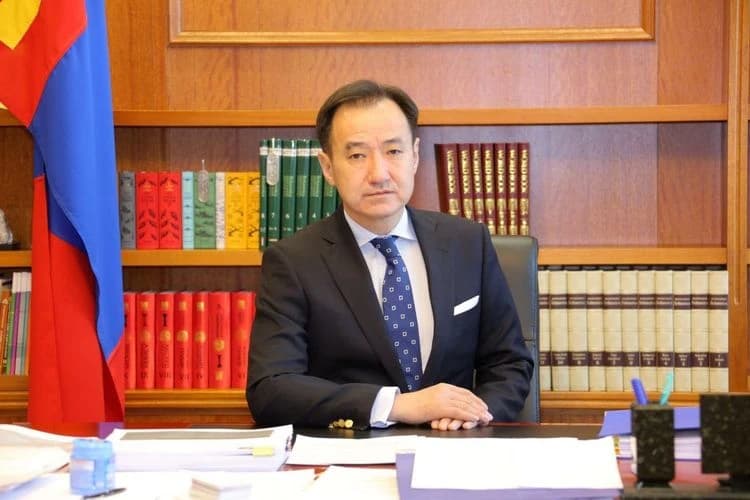
蒙古国视角下的近邻友邦、中蒙关系及其国际观
Д.Цогтбаатар www.rimpac-shanghai.cn-д ярилцлага өгчээ
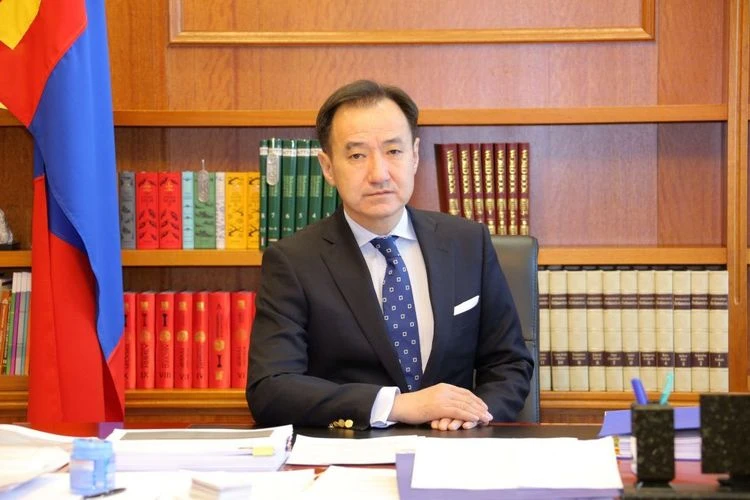
——对话蒙古国前外长朝格图巴特尔
编者按:“对话专家”是上海环太国际战略研究中心自2025年起推出的全新栏目,由本中心主任王南森主持并邀请各国知名政治学者、战略大家、前外交官、军政要员和商界翘楚等,以书面采访形式展开的一对一对话。主持人以平和及客观理性的姿态,与每位受访者就其所熟知的领域进行坦诚交流与互动,以求开阔视野并从不同的角度去进一步理解和认识地缘政治、科技竞争、安全事务、全球治理、国际传播、两岸问题等诸多议题的内涵与外延,并借此与读者分享。我们相信,来自我国乃至他国精英的思想都是人类知识的宝库,所谓“他山之石,可以攻玉”,是乃推出本栏目之初心。
本期采访和对话嘉宾:丹穆丁 ∙ 朝格图巴特尔阁下,蒙古国资深外交官和政要,现任国家大呼拉尔(议会)法律事务委员会主席,前外长。1994年起进入蒙古国外交部亚洲司任参赞,外交部国务秘书(2008-2011),曾历任自然、环境与旅游部长(2012),建设与城市发展部长(2014-2015),国会人权委员会主席(2016-2017),外交部长(2017-2020),出任过两任蒙古国总统的外交政策顾问。
2025年起任上海环太国际战略研究中心外国专家组成员。
蒙古国视角下的近邻友邦、中蒙关系及其国际观
——对话蒙古国前外长朝格图巴特尔
(刊出日期:2025年2月24日)
王南森:朝格图巴特尔阁下,您好!首先,我代表上海环太国际战略研究中心对您给予本中心和我本人的工作支持深表感谢!感谢您在百忙中抽出时间来接受采访,就国际政治、区域安全以及中蒙双边关系等议题与我进行对话。您是蒙古国杰出的政治家,资深的外交家和思想家,有机会聆听您对当下国际时政及各国所需直面的要务等发表的观点与看法,对中国读者来说是一次难得的机会。您我已相识多年,您对各类事务的敏锐观察总是令我惊叹和敬佩不已,也很高兴我俩能以这种新的方式来继续我们彼此喜欢并能激发彼此思考的交流。下面,我会向您提出几个问题。
朝格图巴特尔:我也一直很喜欢与您交流,感谢邀请我参加您主持的“对话专家”栏目并回答您的问题,这是我能与更多中国朋友交流的好机会。
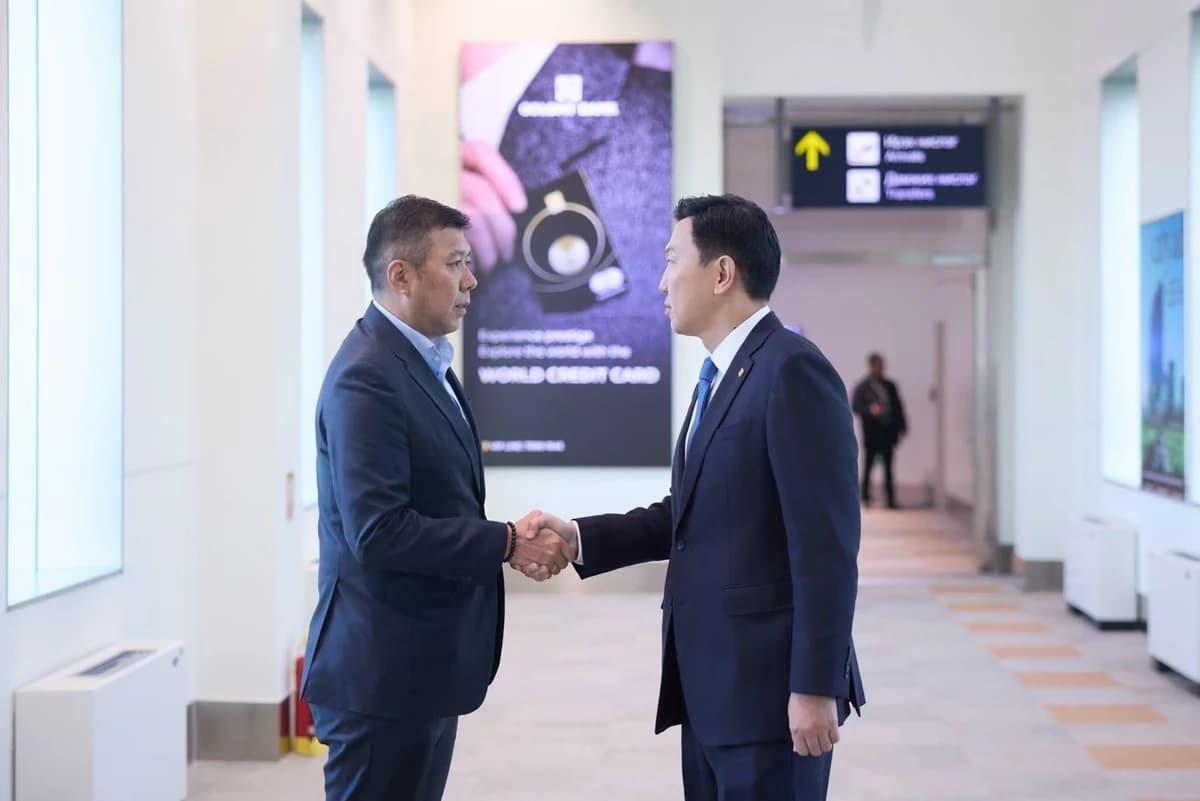
王南森:得知阁下您即将启程飞往北京,陪同贵国国家大呼拉尔(议会)主席出访我国,并与中方官员会面。您能谈一下此次贵国议会主席一行访华的主要目标是什么?或者,您如何来简单地描述一下中蒙两国的双边关系及其现状?您认为还有哪些方面值得进一步改善?
朝格图巴特尔:蒙古国是议会民主制国家,大呼拉尔(议会)是我国的最高权力机构。正因为如此,我们与各国国会和议会间保持联系和接触,这在我国发展与各国双边关系中起着非常重要的作用。与中国立法机构的合作也自然是我们双方的要务,两国在立法机构层面的合作与协调,有助于为双方在各个领域的协作奠定法律基础,包括在政治、经济、社会和文化等领域的协作。两国议会(人大)均致力于推动两国企业的双边经贸合作,蒙古国议会与中国的全国人大都愿意加深交流与对话,以求为进一步促进两国间的商贸往来奠定坚实的法律基础。譬如,今次双方会面的要务之一,便是要就两国近期达成的为推动双边跨境运输和贸易协议而专门设立的两个行政部门间协作的具体落实等工作。
此外,我们也期待在政治、经济和立法等广阔层面上扩大我们两国间的对话和交流,并探讨在各领域的常务和特别委员会之间建立更加紧密联系的长效机制。毫无疑问,这也将为两国议会(人大)间建立更有效和更及时的合作铺平道路。
今次我国议会主席的出访还有一层特殊意义,即这是自蒙古国修订宪法后,蒙古立法机构实行成员扩容后,议会最高领导人的首次外访。因此,本次的交流也将有助于我们中国同事能更好地了解我国立法机构的一些新形态和微妙特性转变。简言之,这将会是一次具有历史意义的国事访问,对加深我们两国间的高层对话,为促进两国间的战略伙伴关系和两国及两国人民谋福祉,都将产生重大影响。
王南森:地理位置的特殊,决定了蒙古势必要与俄罗斯和中国保持和维系良好的关系。然而,我相信蒙古也肯定要与其他国家建立联系,以促进贵国的经济发展。请问,哪些国家在促进蒙古国发展方面发挥了积极作用?蒙古是如何在不影响与俄罗斯和中国关系的前提下去实现应有的外交和战略平衡呢?
朝格图巴特尔:我们与中俄两个邻国保持着非常密切的友好关系。这种关系不仅是亲密的,更是紧密的,并且我们也已正式将其定义为是基于互信的战略伙伴关系。这种合作不仅仅是因为地理位置所就,还由于长期以来双方在社会、政治和文化等领域的互动,形成了我们相互间深厚的邻里情感。换言之,战略伙伴关系的建立并非因为地理因素而没有其他选择,而是基于自主选择的一种结果。战略伙伴关系意味着双方之间的彼此信任,即蒙古与中国之间的信任,以及蒙古与俄罗斯之间的信任。正是因为有了这样的信任基础,且所有参与者也都知道,在维持双边和多边合作时,各方都会主动在不伤害任何一方,尤其是在不妨碍邻国间的建设性互动前提下,去寻找和促进我们各自国家的发展。谁会反对这样的合作呢?
习近平主席提出的人类命运共同体倡议,正是旨在促进(而非分裂或阻碍)全球各国间共同繁荣的合作,而友好的国际环境也只有在遵守和维护大小国家主权平等的基础上才能得以实现。谈到共同的未来,中国寻求与世界其他国家展开友好共赢的合作,蒙古国也同样如此。我们在处理与其他国家关系时,注重和平与发展并举,也一直秉持开放与透明的原则并以此作为基础和前提。这不仅仅是口头上的承诺,这些原则和目标已明确写入了我们的“外交政策理念”,并由议会审议通过。我们的两个邻国也充分了解并理解蒙古国外交政策的这一特点。
至于那些与我们保持更加紧密互动关系的国家,其所处的地域则要广阔的多得多了。譬如,在我们邻近亚太区域,特别是东北亚的国家,我们与其就保持着非常活跃的合作关系,而广义概念中的大欧亚地区也是我们在国际间的重要伙伴(最近,中亚各国也正在引起乌兰巴托更多的关注)。顺便提一句,关于蒙古国区域认同的形成,我想简单说明一下。蒙古人主要将自己认定为是一个东北亚国家,其原因显而易见,就譬如,我们与该地区的贸易和投资联系、共同的宗教信仰——佛教、以及促进互联互通的基础设施等,都证明了这一事实。而对于中亚国家,由于连接我们之间的基础设施的局限等客观原因,导致蒙古与中亚的联系较少,尽管蒙古人从未拒绝将自己视为中亚国家。因此,在专门讨论中亚事务的论坛上,蒙古也被作为该地区的一员受邀并积极参与,而在涉及东北亚的活动中,蒙古则作为该地区理所当然的国家参与。
然而,在过去30年间,蒙古人很少反思自己的区域身份问题。因为我们没有统一的标志性术语来定义自己的身份,也一直没有一个统一的表述。因此,在2020年,我提出将蒙古界定为“双区域”国家。除了中国和俄罗斯,其他中亚国家无法去声称自己拥有这样的双区域身份,因为它们是完全意义上地处中亚的内陆国家。同理,其他东北亚国家也无法像蒙古那样拥有这种身份,只有我们三国(蒙、中、俄),由于都拥有辽阔的土地才能作出这样的身份宣告。当然,这也不仅仅是地理概念,还包含了宗教、文化、文明和历史的维度。
王南森:蒙古与中国是好邻居,有着长期和稳固的双边关系。我们也都应该懂得,所谓的“中国威胁论”只是因误解以及一些反华情绪所导致的一种叙事。在您看来,中国可以做些什么来减少这种误解?是否应该至少去争取和获得像蒙古这样的友好邻国的支持呢?这方面的工作应该如何去做呢?
朝格图巴特尔:中国的崛起及其在实践中所推出和倡导的各项政策,已经表明了其和平崛起的说法并非仅仅是口号。中国一直在坚持并付诸实践。然而,众所周知的是,历史上大国的崛起过程很少是和平的。因此,中国实际上在努力应对这种基于历史经验的再认知。在世界各地绝大多数的人看来,相信非和平崛起比相信和平崛起要容易得多,因为大国的掠夺行为,人类历史上比比皆是。此外,人类天生更容易去相信坏消息,而非好消息。在当下被社交媒体驱动的世界中,这种现象尤为凸显。正是因为有了那么多历史上的负面记忆,疑虑仍然弥漫在空中,久久不能散去。当然,除了这种负面历史记忆的因素外,还应看到的是中国日益增长的竞争力,这也激起了许多国家和非国家行为体的担忧。
因此,中国政策的一致性和抵御各种质疑的韧性,最终会让人们相信他们所看到的,而非所听到的。在这里,我要强调的是,中国通过持续展现其克制、理智和东方式的耐心,已经赢得了全球范围内许多国家的尊重。中国在科技、创新、制造、贸易和国际援助等方面所取得的成功,已经改变了世界上许多人的看法。我们东方人知道,信任不是轻易得来的,而是通过艰辛和持续的工作赢得的。因此,要获得更多信任,首先需要继续以真诚待人、尊重他人的态度与伙伴们展开建设性合作,当然,这肯定也需要时间。当然,在共赢的原则基础上不断去帮助落后国家达到共赢水平的政策,是至关重要的。就我所观察到的情况来看,中国已经在其政策中具备了这些要素。因此,中国应该能够赢得世界上越来越多大小国家的信任,并以此促进共同成长。
我在此还想额外发表一点评论。如果我没有记错的话,有一位中国军事将领因其倡导了“不战而屈人之兵”的理念而获认可,并被誉为是一位理智且受尊敬的指挥官,这是中国文化所独有的。与中国结伴的国家都应遵循这样的哲学,若他们在自身的文化中都能吸收这样的基因并对此给予高度重视,定能更好地理解当今中国的行事逻辑。然而,若这样的价值观被同伴们忽略,或认为乃不合时宜的返祖现象,则将会带来相反的效果。所以,如果我们想避免在安全观方面的分歧进一步加深,那么,在工作中的任何一个细节都不能忽视,都不能放过。所以说,当我们努力去采取各种预防性措施的同时,还应该强调这些历史考量和哲学理念,忽略其重要性将会是一种遗憾,将等同于违背了和平合作的宗旨。
王南森:好!那我们暂且把双边关系放一放,来看看整个世界局势吧。您最近在X平台上的发贴中,有一段话引起了我的注意。您说:“个人认为,我们似乎正在进入一个新的世界,一个我称之为是‘新现实主义治下的超级实用主义’的时代”。事实上,在特朗普再度入主白宫之前,您就准确预见到了这一趋势。能否请您简要地向我们读者解释一下您所说的“新现实主义治下的超级实用主义”究竟是什么意思?
朝格图巴特尔:除了这个新的表述,在咱俩此前的沟通交流中,我还曾与您分享了我对国际外交中令人惊讶的非理性现象的看法,这种现象正在撕裂整个世界。我们过于习惯地认为外交是理性的,通常很少会将“非理性”与“外交”或“国际关系”相提并论。这种非理性已经使得紧张局势达到了极点,正如物理学中的运动定律一样,自然的反作用显然正在起作用。我们所看到的反作用已不仅仅是实用主义政策那么简单了,而是远远超出了一般意义上的务实策略,这就是我所称的“超级实用主义”。可以看到的是,各国在移民问题、性别问题、政府开支、援助政策审查,到以牙还牙式的关税提案等方面所采取的做法,已不仅仅是基于“务实”理念和动机,简直就是以一种令人震惊的超级实用的方式在推动其施政策略。而若各方都能按常理行事的话,这些措施在推出前,会在应有的政策辩论中遭到理智一方的强烈反对,其结果至少有望能达到某种常规务实的水平。
最近,我们向两个邻国提出了减少核支出的呼吁,实际上也是针对过去几年间核对峙已几近成为常态的超级务实现象的一种回应。如果人类已经积累了可以摧毁我们自己多次的核武器,为什么还要继续增加呢?自我摧毁能力的概念本身已经足够荒谬和危险了,所有多余的武器只会是多余的。拥有一次摧毁世界的能力,以及互相确保毁灭的系统已能有效防止风险的发生,那么,还要更多核武器来做什么呢?既然我们已经拥有了过剩的能力,减少这些早已不合理的库存可能也不现实,那么,为什么还要继续添加呢?我们应该做的是协商如何去减少更多在这方面的支出才对嘛!因此,提出减少大规模杀伤性武器支出,并且不再增加已有的核库存,这不仅是务实的,更是在当今全球政治环境下的“超级务实”。
与此同时,国际关系也呈现出了新现实主义的倾向。因为,在我看来,当一个领导人基于自私和自我意志而采取现实主义策略,并正以为了实现力量均衡和重塑国际关系之目的来自圆其说时,完全符合了(国际关系理论家)肯尼思∙沃尔兹对“新现实主义”的定义。针对一些国家提出一系列加征进口关税,而在很短时间内遭到对方反制后又立即暂停征税的做法,便是最好的例证。而此现象正在变成一种常态。
王南森:我还观察到,随着前苏联的解体,意识形态领域的争斗本该随之而变得不合时宜,进而也会防止世界的分裂。但在过去30年里,“政治西方”一直在试图将世界重新划分为“民主国家”与其所称的“专制政权”之间的斗争。现如今,“新现实主义治下的超级实用主义”似乎又成为了许多国家的选择。那么,在您看来,世界是否可以在没有任何意识形态叙事的驱动下重新凝聚在一起呢?您认为,要避全球免陷入另一场世界大战的话,最为关键的要素是什么?让我们拿出一些积极向上的观点来结束咱俩今天的对话吧!
朝格图巴特尔:在寻求和平的过程中,避免去指责某一方是很重要的。在当今世界的建构过程中,所有人都做出了一定的贡献。没有纯粹的圣人,也没有纯粹的恶魔。如果我们开始追究谁是谁非,那么我们将陷入无休止的相互指责的漩涡中而不能自拔。这将使我们远离问题的解决,甚至可能会去加剧现有的复杂局面。
老实说,如果一定要责怪什么,那么,我认为问题在于人类前所未有的成功和进步。这种前所未有的财富和对更多财富的渴望彻底腐蚀了我们的思想,使我们在精神上变得脆弱,无法应对各种困难,尽管这些困难与我们前几代人必须所克服的挑战相比乃微不足道。我们这代人已变得过于傲骄,充满抱怨且过于脆弱,永远不满足于任何事物。而这种过于傲骄的态度更阻碍了应有的让步和妥协。结果,伴随着既能给我们带来舒适也可能引发致命冲突的那些激动人心的技术进步,却使我们最终陷入了一个前所未有的危险世界。这是当下全球外交界急需共同来解决的问题。
既然我们现在面临着生存挑战,我在设想,在国际关系中形成的“新现实主义治下的超级实用主义”必将促使被遗忘已久的“和平共处”概念(尽管政治制度存在差异)的重新回归。我猜想,在这种转变下,“和平”一词将成为各国所追求的结果。
此外,我相信,在这个充满挑战的时代,面对复杂多样的文化和文明各异,外交中的专业性将重获新生的动力,其重要性也将再度凸显。因为,背离了专业外交后,要去解开错综复杂、纠缠不清的国际问题将是不可想象的。
在“新现实主义治下的超级实用主义”环境下,将会引发人们对权力和武力的反思,尽管这可能会触发大众的反感,但却是很有必要的。我在猜想,围绕这一问题的反复思辩,最终有可能给这个世界带来一种新的平衡。至于这种新的平衡将会是什么样子,我们还有待观察。诚然,这种不可预测性也会引发国际关系专家们的担忧,但也恰恰是专家们应正视的要务所在。
最后,在展望“新现实主义治下的超级实用主义”时,我提出了各大国应尽早采取的一项行动,即重申对2022年1月3日发表的《核武器国家关于防止核战争和避免军备竞赛的联合声明》的承诺,进而达成一项关于防止核武器扩散的新的协议。此举必众望所归。
令我感到有些惊讶的是,美国新政府此前已向我们邻国提出了关于减少核武器开支的倡议,这与我所表达的愿望不谋而合。这一举措以及新平衡的实现,我认为,至少是值得我们审慎乐观的理由。
王南森:谢谢您!阁下对上述问题的回答及观点论述非常清晰和精彩。预祝您和贵国议长今次的访华取得圆满成功,并期待我们下次的对话!
以下为王南森与朝格图巴特尔对话的英文原文 /
The following is the original Dialogue in English:
Editor's Note: "Meet the Expert" is a brand new programme to release by the Shanghai Centre for RimPac Strategic and International Studies since 2025. Featuring on a one-on-one dialogue hosted by RimPac Centre's President Nelson Wong with renowned political scientists, strategists, retired diplomats, former government and military officers, and business leaders of different countries, each of the interviews is conducted in a written format to solicit and share the knowledge and insightful comments by the expert as appropriate on topical issues and beyond ranging from geopolitics, technology competition, security matters, global governance, power of the media, and the Taiwan Question, etc. Inspired by the old saying that "stones form other hills may serve to polish the jade of this one", we believe in the need to always hear and learn from the great minds of our own and other nations for self enriching and empowerment.
Expert in Dialogue for this Issue: H.E. Tsogtbaatar Damdin, senior Mongolian diplomat and politician, Chairman of the Standing Committee on Legal Matters of the State Great Hural (Parliament), ex-Foreign Minister. His diplomatic career started as an attaché in the Asian Department of the Ministry of Foreign Affairs in 1994, and as State Secretary of the Ministry (2008-2011). Subsequent offices held include Mongolia’s Minister for the Nature, Environment and Tourism (2012), Minister for Construction and Urban Development (2014-2015) and Minister for Foreign Affairs (2017-2020). He also served as a foreign policy advisor to two Presidents of Mongolia. He was the Chairman of the Parliamentary Subcommittee on Human Rights between 2016-2017. The Shanghai Centre for RimPac Strategic and International Studies is proud to have invited H.E. Tsogtbaatar Damdin to be one of our Distinguished Foreign Experts since 2025.
Close Neighbour, China-Mongolia Relations,
and the World Today,
from the Mongolian Perspective
— A Dialogue with H.S. Tsogtbaatar Damdin
(Released on February 24, 2025)
N. Wong: Dear Mr. Tsogtbaatar, Your Excellency, on behalf of the Shanghai Centre for RimPac Strategic and International Studies, I want to first of all express my heartfelt thanks to you for agreeing to engage in a dialogue with me to discuss on matters relating to world politics, regional security and China-Mongolia bilateral relations. You are a renowned Mongolian politician, a most seasoned diplomat and political thinker that I consider it a privilege for our audience in China and beyond to be able to hear your opinions and insightful comments on some of the pressing issues the world is facing right now. You and I have known each other for many years and I am always impressed by your acute observations and glad that we can continue our intellectual exchanges in this new format. Today, I have a few questions for you.
Tsogtbaatar: I have been enjoying our conversations as always, and thank you for inviting me to participate in your new programme which I consider to be a good opportunity for me to earn and communicate with more of my Chinese friends.
N. Wong: I understand that you will be aboard a flight shortly to accompany the Speaker of your parliament to visit Beijing to meet with your Chinese counterparts counterparts. In your opinion, what is the objective your delegation is expecting to achieve this time? Or, in general, how would you describe the current relations between China and Mongolia? Do you see rooms for further improvement, in what areas for example?
Tsogtbaatar: Mongolia is a parliamentary democracy, which means in our system the Parliament is the supreme power authority of our country. Therefore, parliamentary ties and contacts that we maintain across the world have a significant role in promoting our bilateral and multilateral cooperation. The inter-legislature cooperation with China is, consequently, of top priority for both sides. Our inter-parliamentary cooperation and coordination facilitates the legal basis and consolidates the spirit of amity for joint efforts in every sector, including political, economic, social and cultural spheres. Both parliaments are keen to support trade and economic collaboration between our businesses. To that end the Parliament of Mongolia and the National People’s Congress of China are ready to deepen the dialogue in order to keep setting a solid legal foundation for more intensified commerce, which this time around, for example, includes the pending consideration by the two legislatures of the recent agreement of high significance that was secured between our two executive branches on facilitating cross-border transportation and trade.
Besides, with such commitment to expand our consultations and exchange of views on broader issues of mutual interest in the political, economic and legislative areas, we would be also talking about closer contacts at the standing and special committees levels on a regular basis. These working contacts, of course, ought to set the ground for more efficient and timely cooperation between the parliaments.
The visit of our speaker this time has also one peculiarity, i.e. this is the first top parliamentary visit since the formation of the extended in membership legislature in Mongolia pursuant to the new amendments to our Constitution. Therefore, this would be helpful for our Chinese counterparts to understand better the new features and nuances of our legislative process. In short, this will be a landmark official event, which will have a formidable impact on advancing our top level dialogue and on consolidating our strategic partnership for the benefit of our two countries and peoples.
N. Wong: The geographical location of Mongolia mandates that maintaining good relations with Russia and China seems imperative. Meantime, however, I am sure it is in the interest of Mongolia to keep expanding its relations with other countries in order to boost up its economic development. What other countries have been active and instrumental in participating in your country's development? And how does Mongolia achieve such a balance without arousing unnecessary disagreements with Russia and China?
Tsogtbaatar: We do maintain very close friendly relations with the two neighbours. Therelations are not just close, they are so tight that we officially define themwith both sides on a mutual basis as the partnership of strategic significance.Such cooperation is facilitated not just by geography, but by the long-lasting complex history of social, political and cultural interaction, as a result of which age-long neighbourhood spirit was formed. In other words, such partnership of strategic significance is not worked out because of the absence of another alternative due to the locked-in geography, but it issecured because of the conscious choice of preference by the partiesinvolved. The strategic partnership means the presence of trust between both parties, i.e. Mongolia and China on the one hand, and Mongolia and Russia, on the other. Having such trust all the actors know that each side inmaintaining its own bilateral and multilateral cooperation at the international level will be seeking only constructive interaction that harmsno one, especially in the neighbourhood, and helps our own respective countries progress. Who would stand up against such cooperation?
President Xi’s policy of a spiring for the community of common destiny for the mankind is precisely aimed at promoting (not fragmenting or obstructing) the global cooperation of the world nations for commonly shared prosperity. Such a micable environment is globally achievable only if the sovereign equality of the nations, small and big, are observed and nurtured. By talking about commonly shared future, China seeks friendly win/win collaboration with the rest of the world. So does Mongolia. Our pro-peace and -prosperity aspirations in dealing with the rest of the world are based on the policy principles of openness and transparency. And these are not just verbal deliberations, these are principles and objectives enshrined in our Foreign Policy Concept, adopted by the Parliament, unequivocally. Therefore, both our neighbours are well-informed and aware of these foreign policy features of Mongolia.
As for countries that have more active relationship relations with us, the geography isfairly wide, of course. The countries of our immediate region, i.e. the Asia-Pacific, especially, Northeast Asia maintain very lively cooperation with us.Understandably, the economies of wider Eurasia (with Central Asia startingto attract lately more interest in Ulaanbaatar) are important partners in ourglobal cooperation. By the way, here is an interesting moment related to theformulation of the regional identity of Mongolia that I would want to shortlytackle. We Mongolians were predominantly used to identifying ourselves as a Northeast Asian country for obvious reasons such as the real trade and investment ties,the commonality in religion – Buddhism, tangible infrastructural networkfacilitating the connectivity etc. Traditionally, due to theweakness of the objective infrastructural connectivity, the consequent lack of commerce, etc., Mongolia feels less affiliated with Central Asia, although Mongolians have never rejected ourselves being a Central Asiannation.Therefore, in various forums dedicated to Central Asia, Mongolians have been taking part as a country of the region, while for events of Northeast Asia context, Mongolia hasalso been participating as the nation of the region.
However, in the last 30 years, we Mongolians rarely raised a question as to what identity it does have region-wise after all. There was no one unifying term to define our identity. We used this disparate either-either identification, but we had no unifying term. So, in 2020 I offered to identify Mongolia as a “bi-regional” country. Except for China, Mongolia, and Russia, no country in Central Asia can claim such a bi-regional status for they are purely double-land-locked Central Asian countries. The same applies to those nations in the Northeast: they are all exceptionally Northeast Asian countries, not Central Asian at the same time. Only our three countries (China, Mongolia and Russia) with their vast and stretched landmasses can claim such a status. And it is not only a geographical concept, it has also religious, cultural, civilisational and historical dimensions in itself.
N. Wong: Mongolia and China are good neighbours with our two nations having a long and strong ties. You and I have shared perception that the "China Threat" is a made up narrative out of fear by some people with an anti-Chinese sentiment or a sheer misunderstanding. What in your opinion can China do to minimise such misunderstanding? Is it advisable China should garner the support of at least its good neighbours such as Mongolia to provide assistance, but how?
Tsogtbaatar: The rise of China and the policies that China has been declaring and pursuing in practice have demonstrated that the peaceful rise rhetoric is not just adeclaration. China has displayed consistently so far that it means what itsays. However, in the world history as we know it so far, the rise of a greatpower has rarely been peaceful. Therefore, China has, in fact, been struggling with this bitter historical experience-based understanding. Formany people around the world believing in a non-peaceful rise, unfortunately, iseasier, than a peaceful rise, because the predatory behaviour of bigger players inthe previous history was more often than not. Besides, human beings aregenetically programmed to believe bad news faster than good news. We cansee the evidence of it abundantly from our social media driven world. As aresult, suchsuspicion-stirring rhetoric has been floating around in the air. Ofcourse, in addition to such negativehistorical memory factor, one shouldoutline the increasing competitiveness of China, which is provoking manystate and non-state actors to further flare the sense of insecurity. Therefore, consistency of the Chinese policies, irrespective of all the odds, resilienceagainst scepticism would eventually make people believe what they actuallysee, rather than hear. Here, I would like to emphasise that China through itssteady display of restraint, reasoning and oriental patience has already earnedthe respect of many around the world. China’s success in science, technology, innovation along with the already proven achievements inmanufacturing, trade and commerce reinforced with the international aidcooperation has already changed the minds of many globally. We in the Eastknow that trust does not come easily. It is earned through hard andconsistent work. Therefore, gaining the trust of more requires, firstly,continued sincere and respectful effort to constructively cooperate withpartners and, of course, secondly, time.
The win/win principle coupled with the policy of assisting those who are lagging behind to bring to the level, where they can keep up with the win/win formula is, of course, paramount. As far as I have observed so far, China has all of these ingredients in its policies. Therefore, it should be able to earn more and more trust of countries, small and big, far and near around the world for further shared growth.
And I would also add here one more simple comment. As far as I rewmwnber, China is the only culture, where a military general, who advocated the skill of winning without fight as the supreme art, is elevated to the pedestal of a wise and respectable commander. The very presence of this philosophy should be used by China’s partners for developing trust. If such appreciation is given significance as part of their foundational culture, it has a chance to have real impact in today’s behaviour of China. However, if these values are overlooked by China’s partners as outdated atavism, such will be its effect as well. So, therefore, if we want to avoid aggravation of security disagreements, then, any smallest details should be given a chance of working for the benefit of security. Of course, all other preventive approaches should be employed besides such historical and philosophical pre-determinants. It would simply be a pity not to use this sort of factors for the benefit of peaceful cooperation.
N. Wong: Let's now move away from our bilateral relations and look at the world as a whole. In one of your latest posts on X, you remarked that "We seem to be entering, in my personal/private view, a new world of NEOREALIST SUPERPRAGMATISCM." You have actually mentioned this observation to me before and have rightly predicted this trend even before Trump came back again into the White House. Could you briefly explain to our audience what you mean by Neorealist Superpragmatism, a term you have coined?
Tsogtbaatar: Besides this new formulation, I also shared with you in our previous communications my idea about the surprising irrationalism in international diplomacy that has been ripping the world apart. We are so used to diplomacy being rational and the term irrationalism would rarely, if ever at all, be used along with term diplomacy or international relations. Because this irrationalism has taken the tension to one extreme, as in the physics law of motion, natural counteraction is apparently settling in. The response to the irrational impulses is not just pragmatism, it is goes far beyond that. This is why I use the term "super". From stances on immigration, gender, government spending, aid policy review, tit-for-tat tariff proposals, etc., it could be seen that they are not put in just a pragmatic way. They are postulated in a shocking super-pragmatic way, or else they may at least end up at an ordinary pragmatic level as a result of the possible calibration caused in the process of debates, where there is excessive resistance exerted.
The recent appeal to our two neighbours to reduce the nuclear expenditure was super-pragmatic against the recent past’s nuclear stand-off becoming almost normal. If we, as humanity accumulated nukes that can annihilate us dozens of times, why keep increasing it further. The capacity to destroy us once is already ridiculous and dangerous enough. All the excesses in this field are simply unnecessary and extra. With the minimum capacity of destroying the world once, the mutually assured destruction system stays preventing the risk of use. So why have more? Since we have already over-capacity and reducing this unreasonable stockpile may not be realistic, then, why further keep adding. Let’s reduce more spending on an agreed basis. Therefore, the proposal to reduce the WMD expenditure to add more to the existing excess of nuclear stockpiles is not only pragmatic, but super-pragmatic in our today’s globally paranoid political environment.
International relations are getting neorealist as well, in my view, because a leader’s self-interest- and will-driven realist approach is being rectified by the objective power-parity and institutional build-up of international relations, which is why it is neorealist as defined by Kenneth Waltz. An example is the introductions of spikes in tariffs against some countries only to be suspended after a short-while for some period due to the counteraction by countries subjected to the spike. And these processes are becoming very natural.
N. Wong: I have been observing also that, although the collapse of the Soviet Union should have stopped the division of ideological pursuit and hence the division of the world, the Political West has for the last 30 years pushed too hard trying to re-divide the world into a fight between "democracies" and the so-called "autocracies". Now that since "Neorealist Superpragmatism" seems to have become the choice by many, do you believe the world can be held together without any ideologically driven narratives that the modern world has been so accustomed to? What in your opinion will be crucial for the world to save itself from entering into another major world war? Let's have some optimism to conclude our dialogue today.
Tsogtbaatar: The important thing in seeking peaceful arrangement is to avoid blaming this or that side. In building the world the way it is today all have contributed something. There are no pure saints and there are no pure devils. If we start engaging in the identification of a wrong-doer, then, we end up in endless blames and counter-blames. This will distance us from problem solution and may even exacerbate the already existing complications.
Honestly, if something really has to be blamed, then, I would say the unprecedented success and progress of the humanity is the problem. The unprecedented wealth accumulation and the hunger of always wanting for more wealth has absolutely corrupted our mind and weakened us spiritually against the challenges that are incomparably minor vis-à-vis the challenges our previous generations had to overcome. Our generation has become overly proud, whiny and fragile, and is never content with anything. And this overly proud attitude pre-empts concessions and compromise. As a result, with the exciting technological advance, which can both comfort us or collide us into a deadly conflict, we have ended up in this unprecedentedly dangerous world. This is the problem our global diplomacy now needs to solve jointly.
Since we are facing this existential challenge I now have pictured, the forming of the neorealist super-pragmatism in the context of international relations will prompt the return of the well-forgotten concept of ‘peaceful coexistence’ (despite the differences in political systems). The word ‘peace’ under such shift is the outcome that would be sought, I guess.
Also I believe that in such challenging times with complex and diverse intercultural and –civilisational divergences, the role of professionalism in diplomacy will be gaining new momentum and prominence. Without such professionalism untangling the intertwined, overly mixed and mingled knots of international problems will be impossible.
Under the neorealist super-pragmatic approach, the issue of power and force may gain a new emphasis. This apparently may cause mass frown but it would be the right thing to do. As a result of back and forth interactions related to this issue, the world would end up in a new equilibrium, I would guess. What this new equilibrium would be like is yet to be seen. Of course, this unpredictability is a cause of concern for international relations experts. However, the expert should take it as the homework of the day.
Finally, in projecting this new neorealist super-pragmatism I have outlined, the following may be considered as the early desired moves on the part of the global players; the reiteration of the commitment to the Joint Statement by the Nuclear-Weapon States on the Prevention of Nuclear War and Avoidance of Arms Races, dated January 3, 2022, and the new deal on the non-proliferation of nuclear weapons.
Somewhat to my surprise, the earlier mentioned initiative by the new US administration addressing our neighbours to reduce nuclear weapons’ expenditure was very consonant with this desire of mine. This move and the gaining of a new equilibrium, I guess, are good causes for cautious optimism.
N. Wong: Thank you very much, Your Excellency! Your answers to my questions as well as your provision of argument to elaborate your views are truly clear and enlightening. Let me wish you and your Speaker's visit to China a great success, and I look forward to our next dialogue in anticipation!
我的夏季
Хятад мэдээний редактор
Сэтгэгдэл бичих
Хүндэтгэлтэй, соёлтой хэлж бичихийг хүсье. Сэтгэгдлийг нийтлэлийг уншигчид шууд харна.
Сэтгэгдлүүд (0)
Одоогоор сэтгэгдэл байхгүй байна. Та хамгийн түрүүнд сэтгэгдэл үлдээнэ үү.