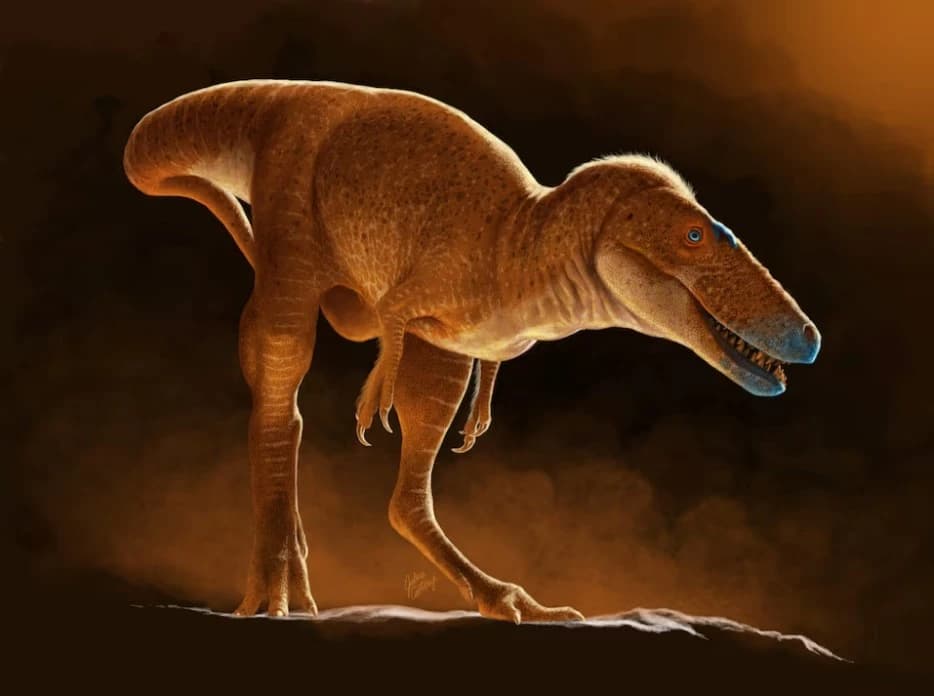
暴龙的祖先——“蒙古汗赫龙”(龙王子)
Khankhuuluu mongoliensis
文章来源:Reuters(英国路透社)
导读:恐龙是除外星人以外人类最为感兴趣的事物之一。近期,古生物学家对19世纪70年代在蒙古国出土的暴龙骨骼进行了重新检验,发现原来暴龙的祖先“另有其人”。研究人员将其命名为“Khankhuuluu mongoliensis”(蒙古语中的“龙王子”之意),旨在说明“王子”是“暴君”的前身。
(翻译:译锅黄桃)
Mongolia’s ‘Dragon Prince’ dinosaur was forerunner of T. rex
蒙古国的恐龙(龙王子)——雷克斯暴龙的祖先
A newly identified mid-sized dinosaur from Mongolia dubbed the “Dragon Prince” has been identified as a pivotal forerunner of Tyrannosaurus rex in an illuminating discovery that has helped clarify the famous predator’s complicated family history.
经认定,蒙古国新出土的中型尺寸恐龙(化石)——绰号“龙王子”——是雷克斯暴龙(Tyrannosaurus rex)的重要祖先。这一发现宛如一盏明灯,帮助人们理清了这一久负盛名的掠食者的复杂种族史。
生词释义:
Tyrannosaurus rex n. 雷克斯暴龙(霸王龙)
illuminating adj. (本义)照亮的,照明 的; (比喻)启蒙的,富有启发性的
predator n. 捕食性动物;掠夺者
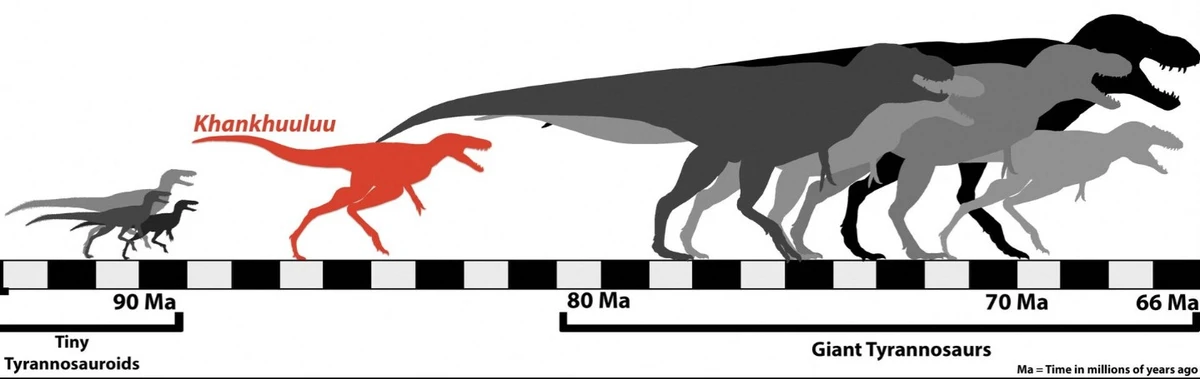
Named Khankhuuluu mongoliensis (pronounced khan-KOO-loo mon-gol-ee-EN-sis), it lived roughly 86 million years ago during the Cretaceous Period and was an immediateprecursor to the dinosaur lineage called tyrannosaurs, which included some of the largest meat-eating land animals in Earth’s history, among them T. rex. Khankhuuluu predated Tyrannosaurus by about 20 million years.
该恐龙得名“蒙古汗赫龙”(Khankhuuluu mongoliensis)(读作khan-KOO-loo mon-gol-ee-EN-sis),生活在约8600万年前的白垩纪,是暴龙的直系祖先。暴龙属种囊括了地球历史上最大的肉食性陆生动物,比如雷克斯暴龙。蒙古汗赫龙比暴龙早出现约2000万年。
生词释义:
Khankhuuluu mongoliensis n. 蒙古汗赫龙(暴龙的祖先)
the Cretaceous Period n. 白垩纪时期
immediate n. (关系)最接近的,直系的;立刻的,即时的
precursor n. 先驱,先锋,前身
lineage n. 血统,世系
tyrannosaurs n. 暴龙,霸王龙
It was about 13 feet (4 meters) long, weighed about 1,600 pounds (750 kg), walked on two legs and had a lengthysnout with a mouthful of sharp teeth. More lightly built than T. rex, its body proportions indicate Khankhuuluu was fleet-footed, likely chasing down smaller prey such as bird-like dinosaurs called oviraptorosaurs and ornithomimosaurs. The largest-known T. rex specimen is 40-1/2 feet long (12.3 meters).
蒙古汗赫龙体长13英尺(4米),重约1600磅(750千克),以两足行走,长鼻之下满口利齿。与雷克斯暴龙相比,该恐龙体型轻巧,由此可知,其步伐轻快,捕食更小的猎物,譬如形似鸟类的窃蛋龙(oviraptorosaurs)和似鸟龙(ornithomimosaurs)。已知体型最大的雷克斯暴龙标本体长达40.5英尺(12.3米)。
生词释义:
lengthy adj. 长的;漫长的;冗长的
snout n. 鼻子;(英)烟草,香烟
body proportions n. 身体比例(头身比)
chase down v. 追逐并抓住
oviraptorosaurs n. 窃蛋龙类(生存于白垩纪的兽脚类恐龙演化支,具有类似鸟类的生理结构和繁殖行为,与鸟类有共同的祖先。)
ornithomimosaurs n. 似鸟龙类(生存于白垩纪的虚骨龙类恐龙,化石分布于欧亚大陆及北美地层)
Khankhuuluu means “Dragon Prince” in the Mongolian language. Tyrannosaurus rex means “tyrant king of the lizards.” “In the name, we wanted to capture that Khankhuuluu was a small, early form that had not evolved into a king. It was still a prince,” said paleontologist Darla Zelenitsky of the University of Calgary in Canada, co-author of the study published on Wednesday in the journal Nature.
“Khankhuuluu”意即蒙古语中的“龙王子”。而“Tyrannosaurus rex”意为“暴君蜥蜴之王。”“就命名而言,我们意在传递‘Khankhuuluu’是尚未进化为君王的小型、早期形态。它仍是个王子,”加拿大卡尔加里大学(the University of Calgary)的古生物学家达拉·泽连尼茨基(Darla Zelenitsky)说道。其也是周三《自然》杂志上所发表的研究的合著者。
生词释义:
lizard n.蜥蜴
capture v. 充分体现;捕获,俘虏;占领,夺取;吸引,引起
paleontologist n. 古生物学家
the University of Calgary n. 卡尔加里大学(位于加拿大阿尔伯塔省卡尔加里市西北部的著名研究型大学,加拿大顶级大学之一。)
Tyrannosaurs and all other meat-eating dinosaurs are part of a group called theropods. Tyrannosaurs appeared late in the age of dinosaurs, roaming Asia and North America.
暴龙和其他各类食肉恐龙同属兽脚亚目。暴龙于恐龙时代末期出现,在亚洲和北美一带活动。
生词释义:
theropod n. 兽脚亚目食肉恐龙(属于蜥臀目,出现在三叠纪中期。大多数都是肉食性恐龙,两足行走,趾端长有锐利的爪子,嘴里长着匕首或小刀一样的利齿,牙齿前后缘常有锯齿。暴龙是其著名代表。)
roam v. 漫步,闲逛
Khankhuuluu shared many anatomical traits with tyrannosaurs but lacked certain defining characteristics, showing it was a predecessor and not a true member of the lineage.
从解剖学上看,蒙古汗赫龙与暴龙有许多共同特征,不过,前者缺少典型特征,由此表明其是暴龙的祖先却并非该属种的真正一员。
生词释义:
anatomical adj. 解剖(学)的;结构上的
defining adj. 最典型的;起决定性作用的
predecessor n. 前任,前辈,前身
“Khankhuuluu was almost a tyrannosaur, but not quite. For example, the bone along the top of the snout and the bones around the eye are somewhat different from what we see in tyrannosaurs. The snout bone was hollow and the bones around the eye didn’t have all the horns and bumps seen in tyrannosaurs,” Zelenitsky said.
“蒙古汗赫龙几乎算是一种暴龙,但不完全是。比如,其顶部鼻骨和周圈眼骨与我们所看到的暴龙的特征略有不同。其鼻骨中空,眼骨未有可见于暴龙眼骨上的角状物和突起物,”泽连尼茨基表示。
生词释义:
hollow adj. 空的,空心的;凹陷的;空洞的,没有价值的
bump n. 肿块;隆起,凸块
“Khankhuuluu had teeth like steak knives, with serrations along both the front and back edges. Large tyrannosaurs had conical teeth and massive jaws that allowed them to bite with extreme force then hold in order to subdue very large prey. Khankhuuluu’s more slender teeth and jaws show this animal took slashing bites to take down smaller prey,” Zelenitsky added.
“蒙古汗赫龙牙齿如牛排餐刀,前后端锯齿遍布。大型暴龙牙齿形如圆锥,前爪巨大,因此拥有难以置信的咬合力和抓握力,以震慑体型较大的猎物。而有着细长牙齿和前爪的蒙古汗赫龙会通过撕咬来粉碎小型猎物,”泽连尼茨基补充道。
生词释义:
steak knife n. 牛排刀
serration n. 锯齿(边),锯齿(刃)
conical adj. 圆锥的;圆锥形的
subdue v. 镇压,制服;克制,抑制(情绪)
slender adj. 细长的;苗条的,纤细的
slashing adj. 猛烈的,严厉的 (slash: v. 劈,砍;猛烈抨击)
take down v. 拆除,拆卸;记录,记下;(从高处)取下
The researchers figured out its anatomy based on fossils of two Khankhuuluu individuals dug up in the 1970s but only now fully studied. These included parts of its skull, arms, legs, tail and back bones.
研究人员根据20世纪70年代出土的两具蒙古汗赫龙骨骼化石(部分)弄清了其解剖结构,不过时至今日才进行整体研究。这些化石包括部分头骨、前肢、后腿、尾巴以及脊骨。
生词释义:
anatomy n. 解剖学;解剖构造,组成结构;人体
dig up v. 挖掘,发掘
The Khankhuuluu remains, more complete than fossils of other known tyrannosaur forerunners, helped the researchers untangle this lineage’s evolutionary history. They concluded that Khankhuuluu was the link between smaller forerunners of tyrannosaurs and later true tyrannosaurs, a transitional animal that reveals how these meat-eaters evolved from speedy and modestly sized species into giant apex predators.
蒙古汗赫龙的残骸比其他已知暴龙祖先的化石更完整,帮助研究人员理清了该属种的演化史。研究人员得出结论:蒙古汗赫龙在更小体型的暴龙祖先和随后出现的真正暴龙之间起着连接作用,是为一种过渡型的物种,揭示着这种食肉动物从一种速度占优的中型动物变为巨型顶级掠食性动物的演化过程。
生词释义:
remains n. 遗体,遗骸;剩余物,残留物;遗迹,遗址
untangle v. 整理,理清;解开,松开
apex n. (机构,体系)最上层;顶点,顶峰
“What started as the discovery of a new species ended up with us rewriting the family history of tyrannosaurs,” said University of Calgary doctoral student and study lead author Jared Voris. “Before this, there was a lot of confusion about who was related to who when it came to tyrannosaur species.”
“最初本以为发现了新的物种,最终却是要重写暴龙的种族史,”卡尔加里大学的博士研究生兼该研究的第一作者加莱德·沃瑞斯(Jared Voris)说道。“在此之前,只要谈及暴龙属种时,相互关系的问题便会让人困惑不已。”
生词释义:
lead author n. 主要作者
Some scientists had hypothesized that smaller tyrannosaurs like China’s Qianzhousaurus - dubbed “Pinnochio-rexes” because of their characteristic long snouts - reflected the lineage’s ancestral form. That notion was contradicted by the fact that tyrannosaur forerunner Khankhuuluu differed from them in important ways.
一些科学家曾假设,体型更小的暴龙能够反应该属种的原始祖先形态,如中国的虔州龙(Qianzhousaurus)(又名“皮诺曹恐龙”,因其有着标志性的长鼻子)。而蒙古汗赫龙有着不同于暴龙的特征,却又是其祖先,这一事实证明,该假设不成立。
生词释义:
hypothesize v. 假定,假设,猜测
Qianzhousaurus (Pinnochio-rexes) n. 虔州龙(“皮诺曹恐龙”,生存于白垩纪晚期,暴龙科暴龙属的一种肉食性恐龙,属于暴龙类中的长吻分支。其头骨瘦长,鼻部显著隆起,牙齿细长且下颌强健。)
contradict v. 相矛盾;反驳,否认
“The tyrannosaur family didn’t follow a straightforward path where they evolved from small size in early species to larger and larger sizes in later species,” Zelenitsky said.
“暴龙家族并未按照从早期较小体型向后期体型逐渐变大的直接路径进行演化,”泽连尼茨基表示。
Voris noted that Khankhuuluu demonstrates that the ancestors to the tyrannosaurs lived in Asia.
沃瑞斯在研究中写道,由蒙古汗赫龙可知,暴龙的祖先曾生活在亚洲。 “Around 85 million years ago, these tyrannosaur ancestors crossed a land bridge connecting Siberia and Alaska and evolved in North America into the apex predatory tyrannosaurs,” Voris said.
“约8500万年前,暴龙的祖先穿过联通西伯利亚(Siberia)和阿拉斯加(Alaska)的陆桥,在北美进化成了顶级掠食性暴龙”沃瑞斯说道。
生词释义:
land bridge n. 路桥
Siberia n. 西伯利亚(北亚地区的一片广阔地带。西起乌拉尔山脉,东至杰日尼奥夫角,北临北冰洋,西南抵哈萨克斯坦中北部山地,南至蒙古国、外兴安岭。) Alaska n. 阿拉斯加(位于北美大陆西北端,东与加拿大接壤,另三面环北冰洋、白令海和北太平洋。)
predatory adj. 捕食性的,食肉的;掠夺性的
One line of North American tyrannosaurs later trekked back to Asia and split into two branches - the “Pinnochio-rexes” and massive forms like Tarbosaurus, the researchers said. These apex predators then spread back to North America, they said, paving the way for the appearance of T. rex. Tyrannosaurus ruled western North America at the end of the age of dinosaurs when an asteroid struck Earth 66 million years ago.
研究人员表示,北美的一支暴龙群随后迁徙回亚洲并分化为了两个分支——“皮诺曹恐龙”和特暴龙(Tarbosaurus)这种大型恐龙。其表示,这些顶级掠食者随后又返回到了北美,为雷克斯暴龙的出现打下了基础。6600万年前小行星撞击地球时,恐龙时代已接近尾声,而当时称霸北美西部地区的正是暴龙。
生词释义:
trek back to v. 返回至
Tarbosaurus n. 特暴龙(发现于亚洲地区的大型暴龙类,在外形上与北美洲的霸王龙非常相似,是当时生态系统中的顶级捕食者。)
“Khankhuuluu was where it all started but it was still only a distant ancestor of T. rex, at nearly 20 million years older,” Zelenitsky said. “Over a dozen tyrannosaur species evolved in the time between them. It was a great-great-great uncle, sort of.”
“蒙古汗赫龙是一切之始,然而却不过是雷克斯暴龙的远祖,两者时间跨度长达2000万年,”泽连尼茨基表示。“对于随时间进化的十几种暴龙而言,蒙古汗赫龙算得上是曾曾曾祖父。”
原文链接: https://www.reuters.com
Ps:译文若存在不当之处,还望不吝赐教。

我的夏季
Хятад мэдээний редактор
Сэтгэгдэл бичих
Хүндэтгэлтэй, соёлтой хэлж бичихийг хүсье. Сэтгэгдлийг нийтлэлийг уншигчид шууд харна.
Сэтгэгдлүүд (0)
Одоогоор сэтгэгдэл байхгүй байна. Та хамгийн түрүүнд сэтгэгдэл үлдээнэ үү.