High Expectations Ride on the Revision of Mongolia's Minerals Law
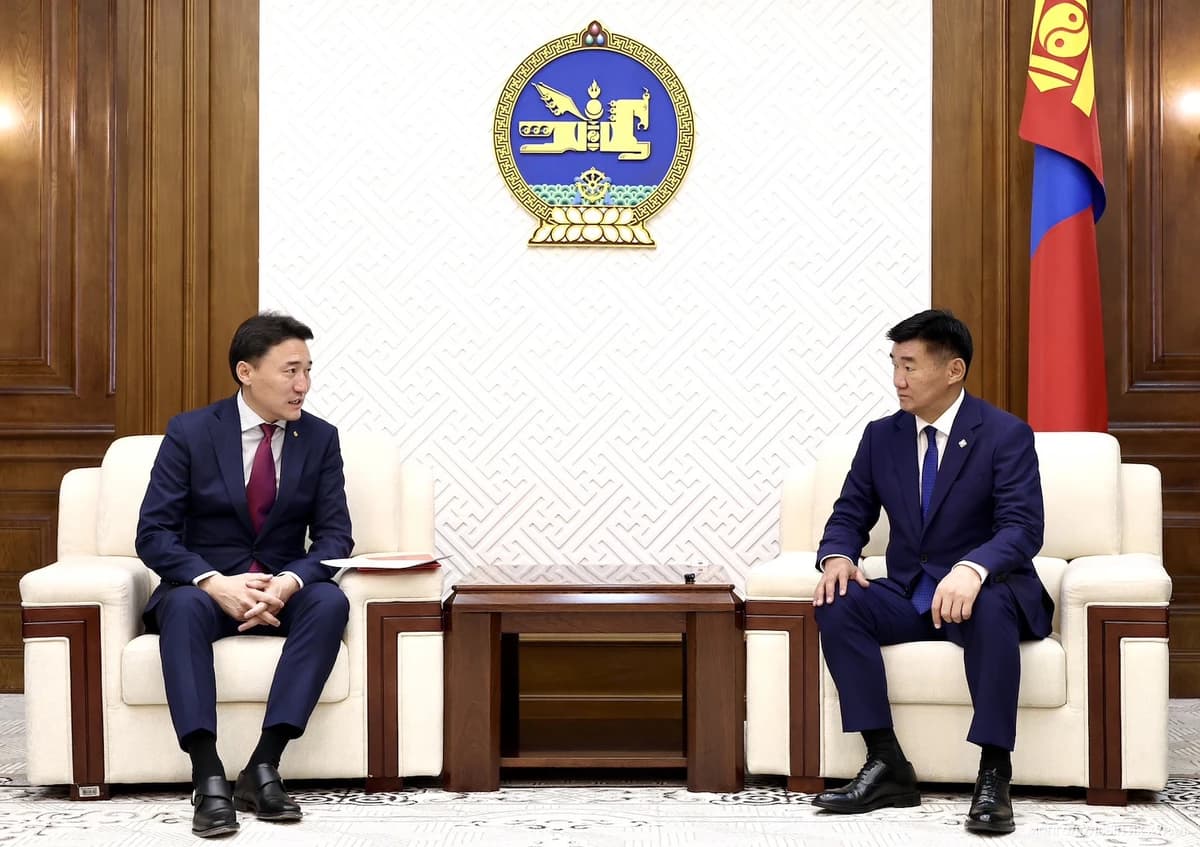
Following more than a decade of anticipation and political gridlock, a draft amendment to the Minerals Law of Mongolia has finally been submitted to the State Great Khural (Parliament). According to G. Damdinnyam, the Minister of Industry and Mineral Resources, the sweeping legislative overhaul will reform roughly 40% of the existing law.
Domestic and foreign investors are highly optimistic about these developments. They view the amendments as a vital mechanism to unlock the structural bottlenecks that have severely hampered the mining sector—the absolute backbone of the Mongolian economy—and slowed down its overarching growth.
The long-awaited revisions address critical pillars of the industry. These include restructuring exploration licensing mechanisms, accelerating greenfield exploration, formulating concrete policies for critical minerals, and modernizing mineral processing and beneficiation frameworks. Furthermore, the draft aims to optimize local community engagement in geological and mining projects while boosting the revenue funneled into the Local Integrated Development Fund via Mining Royalty (Oyu Tolgoi / Resource Use Payment) reallocations.
A primary focus of this policy pivot is the revitalization of exploration activities through diverse licensing methods. To dismantle the long-standing practice of "license squatting"—where companies sit on exploration permits for decades without conducting actual work—the validity period of an exploration license will be slashed by half to just 6 years, while associated holding fees will be significantly hiked. Policymakers anticipate that this will eliminate speculative license trading on the secondary market and open up concrete opportunities for genuine new exploration projects.
Furthermore, the draft outlines a modern strategy for critical minerals, a topic that has dominated global supply chain discussions in recent years. By establishing a clear legal definitions and framework for critical minerals, Mongolia hopes to deepen geological research, bring these vital resources into economic circulation, attract foreign direct investment, and internalize advanced processing technologies. This strategy is also geared toward manufacturing semi-processed or value-added goods, thereby strengthening domestic infrastructure and building local human resource capacity.
In an effort to curb illegal mining and eradicate tax evasion, the amendment introduces strict measures to stop the unregulated purchase of minerals of unverified origin. This loophole has historically distorted the domestic market and incentivized environmental degradation.
On the fiscal front, the amendment directly addresses one of the industry's most vocal grievances: the punitive royalties imposed on copper. The historically high royalty rates on copper had heavily suppressed the economic viability of bringing new copper deposits online. To rectify this, the new draft proposes a sliding-scale royalty tied to both market price fluctuations and the degree of processing. The base mining royalty (Resource Use Payment) will be adjusted so that it adds 0–15% for raw ore, 0–5% for concentrates, and 0–2.5% for fully processed metal products. Industry players believe this progressive model will incentivize downstream industrialization.
Overall, the mining community expects that these progressive measures—opening up the exploration sector, lowering copper royalties, increasing the share of mineral revenues retained by local communities, legalizing formal mine closure procedures, and enforcing administrative liabilities against illegal disruptions of lawful mining operations—will collectively propel the sector forward.
Correcting the Missteps of Ts. Elbegdorj's "Patriotic" Moratorium
For foreign and domestic investors, the reopening of the exploration sector signals the reversal of a decline triggered fifteen years ago by former President Ts. Elbegdorj's politically motivated, "patriotic" moratorium.
To understand the scale of that misstep, one must look back at the 1997 Minerals Law. That landmark legislation established a liberal "first-come, first-served" application system for mining tenures. It dictated that a license could only be revoked under three strictly defined legal grounds, while placing no barriers on the transfer or pledging of licenses. Industry experts widely regarded the 1997 framework as one of the most liberal, transparent, and legally secure mining regimes in the world.
Consequently, the period between 1997 and 2004 witnessed an unprecedented boom in Mongolian exploration. At its peak, nearly 6,000 exploration licenses were active, covering roughly 40% of Mongolia's entire territory. By the early 2000s, this regulatory environment successfully attracted roughly 4% of total global exploration capital to Mongolia. The exponential surge in interest was clear: the state received 1,340 exploration applications in 2000, 2,700 in 2002, and over 5,000 by 2004.
However, the tide began to turn in July 2006, just before the National Naadam Festival, when parliament introduced competitive tendering alongside the traditional application process.
As the mining sector boomed, driving Mongolia’s economic growth to a world-leading 17% in 2012, intense resource nationalism and political populism took hold. While the ruling elite distributed mining revenues as populist social welfare payouts to win votes, an aggressive wave of anti-mining populists emerged, claiming that the country's ancestral lands were being plundered by foreign interests. While the unregulated proliferation of licenses and speculative trading certainly required tighter oversight, politicians chose the easiest and most damaging shortcut available.
In 2011, at the initiative of then-President Ts. Elbegdorj, Mongolia implemented a sweeping freeze on new mineral exploration licenses. The President submitted a bill to temporarily ban the issuance of new exploration permits, which parliament swiftly passed in a closed-door session. This law officially suspended all new exploration licensing until December 31, 2012.
Crucially, this legislative ban was already being enforced informally since late 2010 under directives from the National Security Council (NSC). Acting on these directives, the Mineral Resources Authority complied with a half-page notification signed by B. Khurts, the head of the General Intelligence Agency, which was delivered directly to mining companies. The moratorium was subsequently extended twice—the final extension being indefinite—and expanded to ban the transfer of existing licenses. This regulatory freeze remained unbroken until a legislative amendment finally lifted it in July 2014, effectively suffocating greenfield exploration in Mongolia for nearly five years.
When the ban was first enacted in 2011, Mongolia had a healthy, balanced portfolio of 4,706 active licenses: 3,610 for exploration and 1,096 for mining production. Global industry standards dictate that exploration must lead production by 10 to 20 years; a country must discover deposits before it can mine them.
Unfortunately, Mongolia's moratorium inverted this basic logic. Data from the end of 2025 reveals a highly dysfunctional ratio: Mongolia holds 1,768 active mining production licenses, but a mere 973 active exploration licenses.
Even today, the current system of awarding exploration licenses exclusively through competitive bidding and restricted to government-designated areas faces heavy criticism. Local operators consistently complain that the bidding system creates an unfair advantage for heavily capitalized firms—particularly state-backed enterprises from neighboring China—effectively squeezing out domestic Mongolian exploration companies from their own market. The newly proposed amendment is widely seen as the last best hope to correct these historical imbalances.

Mono.mn
Мэдээний нийтлэгч
Сэтгэгдэл бичих
Хүндэтгэлтэй, соёлтой хэлж бичихийг хүсье. Сэтгэгдлийг нийтлэлийг уншигчид шууд харна.
Сэтгэгдлүүд (0)
Одоогоор сэтгэгдэл байхгүй байна. Та хамгийн түрүүнд сэтгэгдэл үлдээнэ үү.