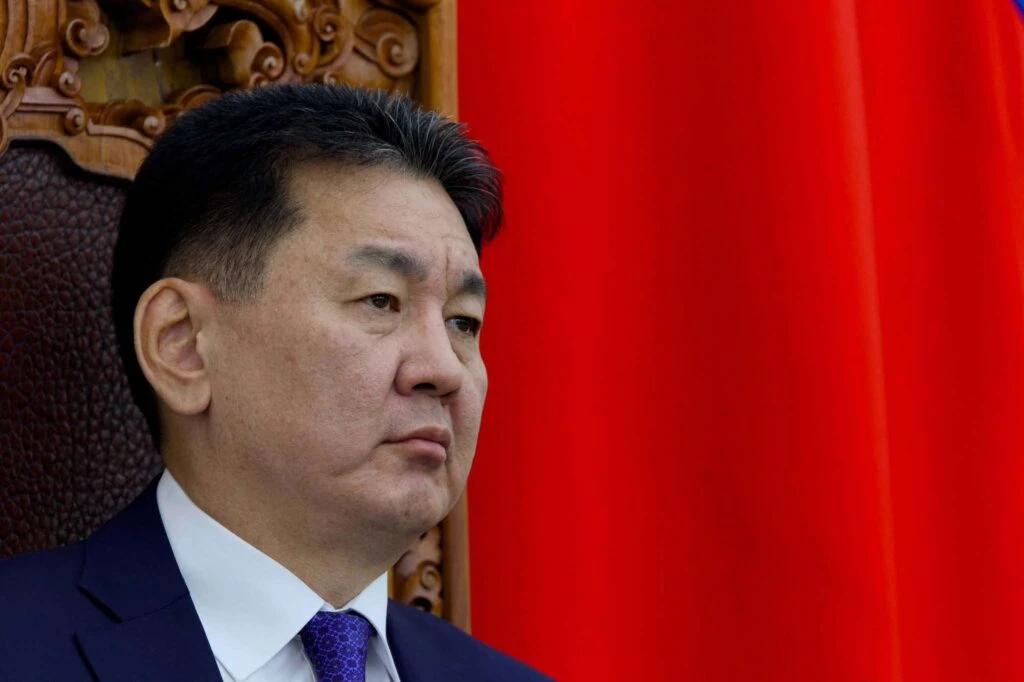
Mongolia’s President Steps Down Amid Corruption Allegations
This article was originally published in English in The Diplomat on November 20, 2026, under the title "Mongolia’s President Steps Down Amid Corruption Allegations"
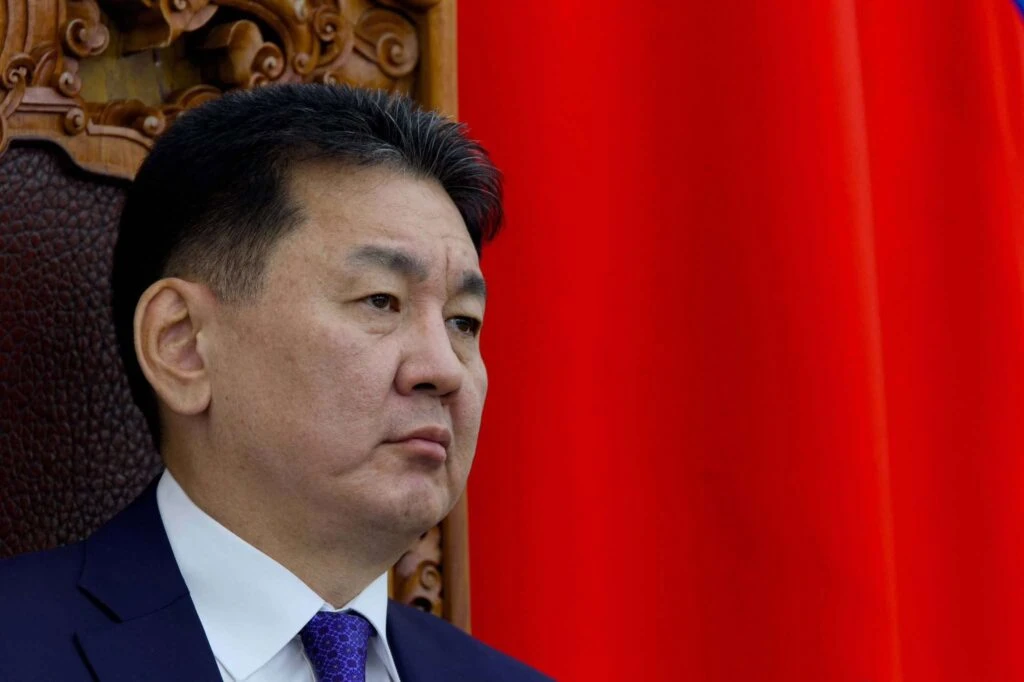
Yet more turnover in Mongolia’s leadership highlights factional politics and a lack of accountability mechanisms.
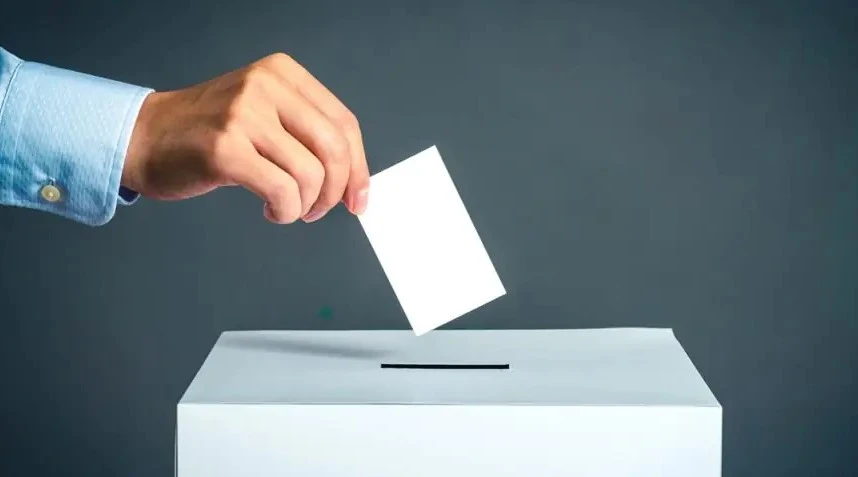
Out of 104 attending members of parliament in the State Great Hural of Mongolia, 96 voted in favor and officially approved the resignation of President Khurelsukh Ukhnaa on November 19. Khurelsukh had announced his intention to resign two days prior. Parliament’s official approval makes makes him the first sitting president to voluntarily step down early since the constitutional reform in 1992.
On the surface, this is a personal crisis triggered by a cross-border railway corruption scandal. Looking deeper, the incident reveals the imbalance of power and responsibility in Mongolia’s semi-presidential system, the fragmentation of ruling party factions, and the failure of resource-based economic governance.
The early election to choose a new president, set to be held in the next four months, is thus not just about changing the head of state. What it really comes down to is whether Mongolia can finally break an old pattern: a scandal hits, someone at the top steps down, the factions reshuffle, and the same problems come back again.
Khurelsukh said he would resign on November 17, after Nyambaatar Khishgee, a former mayor of Ulaanbaatar, alleged that the president had received $25 million in bribes to award a railway project to a specific conglomerate without a competitive tender. Khurelsukh denied any wrongdoing but still offered his resignation.
He’s far from the first Mongolian leader to step down in recent years. Oyun-Erdene Luvsannamsrai was forced to resign as prime minister over a corruption scandal that broke out in May 2025. His replacement, Zandanshatar Gombojav, lasted less than a year before factionalism within the ruling Mongolian People’s Party (MPP) forced him to resign as well.
Systemic Flaws
According to the institutional rules, however, a president may not resign without parliamentary approval.
The unicameral parliament of Mongolia has a total of 126 seats, with the ruling MPP holding 68 seats and the largest opposition party, the Democratic Party (DP), holding only 42 seats. The final result of 96 votes in favor indicates that the fatal blow did not come from the opposition camp, but from within the ruling party. The vast majority of MPP members voted in favor, essentially issuing a political stop-loss order.
For the MPP, which just completed its leadership reshuffle in the spring of 2026, the scandal involving Khurelsukh has become a negative asset dragging down the party’s prospects in the next presidential election, which was originally set for June 2027. From the MPP’s perspective, cutting through the chaos quickly is the best choice. It allows the MPP to project an anti-corruption stance externally – and internally avoid a lengthy impeachment process that could tear apart the party.
Khurelsukh stated that his resignation was a purposeful move to waive immunity, accept investigation as an ordinary citizen, and restore his reputation. It is more likely the result of a tacit understanding between the two sides: the MPP preserves its anti-corruption image, while the now-former president reserves the opportunity to return to politics in the future.
The truth of the accusations remains to be seen. As of now, Mongolia’s anti-corruption agencies have only confirmed that clues related to the $25 million are still under investigation, and no direct evidence has been found for larger cash payment allegations.
This incident has exposed the long-standing loopholes in Mongolia’s semi-presidential system. According to the constitution, the president is in charge of foreign affairs, national defense, and security, with the power to veto bills and nominate key personnel. The prime minister is elected by the majority party in parliament, which dominates domestic affairs and the economy.
The original intention was to balance power, but in practice, it has left a large number of gray areas. If the economy is not doing well and people’s livelihood problems arise, the responsibility lies with the government, and the president does not need to take direct responsibility. However, core interest projects such as large-scale resource development and cross-border infrastructure often require presidential approval, and their actual impact far exceeds the boundaries set by the constitution.
The president enjoys criminal immunity while in office, and conventional anti-corruption mechanisms do not touch the head of state. The majority of the parliament is in the hands of the ruling party, and supervision can easily become a formality. When a scandal breaks through the consensus within the party, the crisis is resolved with a high-level resignation, leaving the roots of the issue unresolved.
In the past two years, Mongolia has had three prime ministers and two speakers of parliament, and now the president has stepped down early. The frequency of abnormal turnover in core positions is much higher than in mature democratic countries.
This model of replacing personnel without restructuring demonstrates the system’s inability to correct errors. Every round of political turmoil ends with the downfall of a figure, but there is no clear delineation of the boundaries of power and responsibility between the government and the court, nor is there a normalization of constraints on the highest power.
When one party dominates, supervision is weakened; when the government and the court are divided between two parties, they fall into internal strife. Either way, Mongolia is left without stable governance.
The MPP’s Internal Politics
From the perspective of the ruling party, Khurelsukh’s resignation marks a significant milestone in the inter-generational power transition of the MPP.
This century-old party has ruled Mongolia for most of the country’s modern existence. The MPP of today has long been divided into the traditional, privileged faction and more pragmatic, younger faction. Khurelsukh was elected president with a high number of votes in 2021, representing the political peak of the old elite. But after the 2024 parliamentary elections, the MPP’s seat advantage significantly shrunk, compounded by high inflation, corruption, and public grievances. Voices within the party calling for a renewed leadership are becoming stronger.
The political turmoil since 2025 essentially reflects how these factional struggles are bursting into the open. Uchral Nyam-Osor, born in 1987, became both the prime minister and MPP chairman in 2026, and has already gained administrative and core party power. According to the constitution, however, presidential candidates must be at least 50 years old. Uchral does not meet the threshold for candidacy, but he controls the party’s nomination process and is a key figure behind the scenes.
Nyambaatar Khishgee, the former Ulaanbaatar mayor who openly accused Khurelsukh of taking brides, is a former high-ranking official of the MPP who fled to Canada to avoid charges in a political scandal of his own. His revelations – revealed in a livestream from overseas – are an off-field means of triggering factional struggles.
In Mongolian politics, corruption allegations are no longer just a judicial issue, but a conventional weapon of factional attacks. The timing of exposure and the pace of dissemination are tools in a broader power struggle.
Mongolia’s Resource Curse
The root of Mongolia’s political turmoil lies even deeper, however – in the governance dilemma of a resource-based economy.
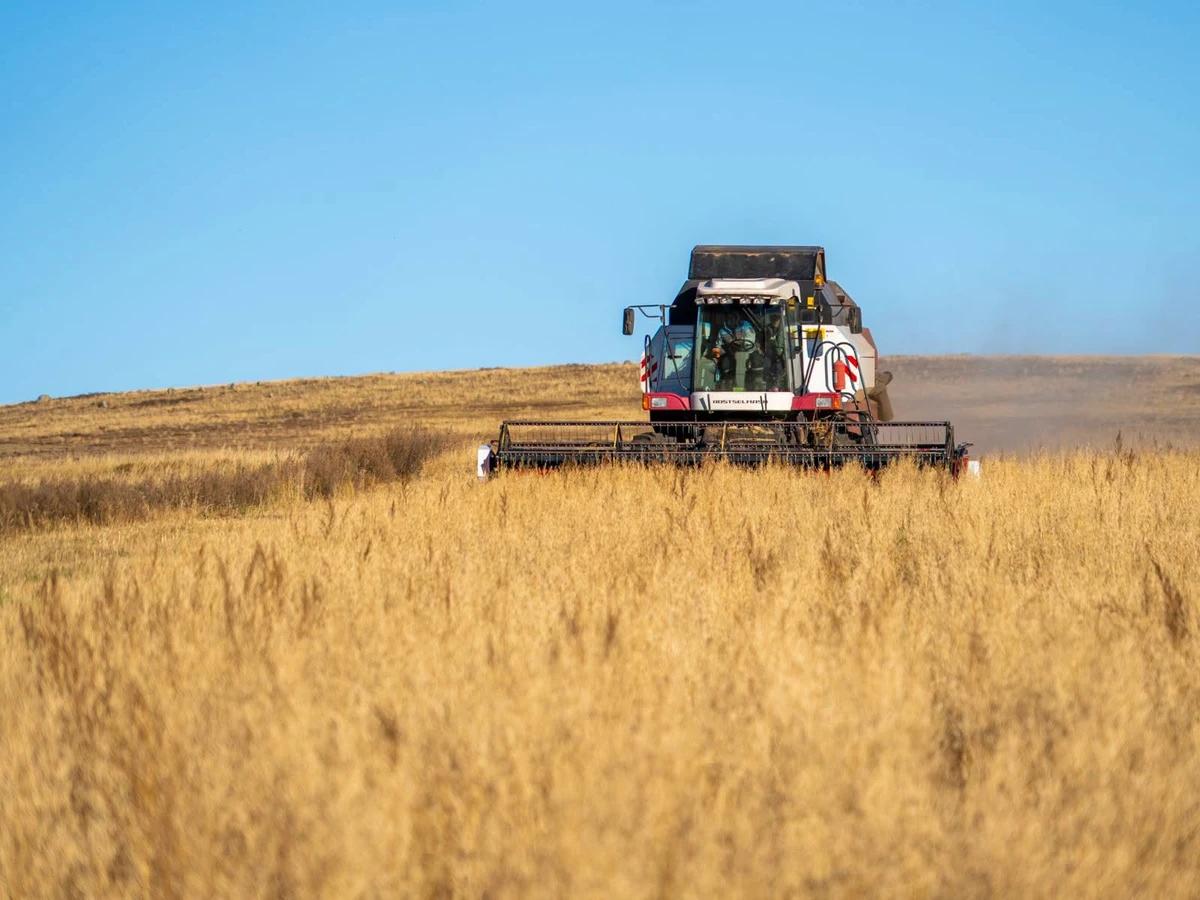
Some 90 percent of Mongolia’s foreign trade is made up of mineral exports, with coal and copper being the financial pillars and also a major area for rent-seeking. From the corruption case involving Tavantolgoi coal mine in 2023 to the Tavantolgoi-Gashuunsukhait Railway charges that led to Khurelsukh’s resignation this week, resource and infrastructure projects have always been fertile ground for corruption allegations.
The Tavantolgoi-Gashuunsukhait Railway at the heart of the Khurelsukh scandal is a 233.6-km line that links the Tavantolgoi mine to Gashuunsukhait port, and from there to the Gashuunsukhait–Gantsmod (Ganqimaodu) cross-border railway. Built 2020–2022, the Tavantolgoi-Gashuunsukhait Railway was constructed using the “coal for work” model, without going through an open bidding process. Disputes have long existed over the award process.
Mongolia’s high concentration of resources and wealth has formed a stable profit-sharing pattern: a small number of political and business elites control development, bidding, and pricing, making it difficult for ordinary people to share the dividends. The wealth gap has remained high for a long time, with nearly 30 percent of the country’s population living near the poverty line, and inflation continuing to erode the lives of low-income groups.
Whenever the economy declines or resource prices fluctuate, accumulated public grievances will erupt through corruption scandals, ultimately leading to the temporary release of tension by removing one or two high-level officials from power.
The most fatal aspect of this cycle is that political reshuffling takes the place of structural reforms. Every time a scandal erupts, public opinion only focuses on who will step down. Public demands rarely promote the construction of grassroots systems that will prevent future problems, such as transparent bidding, public disclosure of officials’ assets, and independent anti-corruption agencies. As long as the profit-sharing pattern remains unchanged, similar scandals and turmoil will repeatedly occur.
Mongolia’s Transition Period
At present, Speaker Byambatsogt Sandag has taken over the presidential powers, and Mongolia has entered a four month transitional period for elections. Byambatsogt, originally from Khovd province in western Mongolia, was just elected as speaker of parliament in April 2026. Prior to that, he had served as minister of transport and minister of defense. After taking office, he immediately established a cross-party consultation mechanism with the aim of restraining vicious confrontations during the election period and ensuring the normal operation of the state machinery.
The future political situation depends on three variables.
Firstly, can the MPP nominate a unified candidate? As noted above, Uchral is constitutionally ineligible due to his age. His public stance has been to prioritize party discipline, economic stabilization, and an orderly process. Uchral has said the election date will be set before December 20 and has framed the transition as a chance to restore public trust.
MPP Secretary-General Sodbaatar Yangug has gone further on the process, stating that the nominee should be selected on the basis of grassroots, party member, and public input together with rating surveys, rather than by closed-door bargaining. He has also publicly backed Khurelsukh’s resignation as a correct constitutional step, even as he dismissed the railway allegations as unfounded.
Even so, the party remains factionalized. Byambatsogt holds the institutional advantage of the acting president’s role, and he has a full administrative résumé. However, he has a potential rival: former Prime Minister Zandanshatar Gombojav retains strong polling numbers and residual support among older networks. If Uchral and Sodbaatar cannot lock in support for a single candidate early, and if Zandanshatar or another traditionalist figure mounts a competing bid, the MPP risks a split that would hand the opposition DP a realistic path to the presidency.
The second question is whether the opposition party can convert their public opinion advantage into votes. The scandal has given the Democratic Party a rare window of opportunity, but the party has long had fragmented factions and a vague policy agenda. Chairman Tsogtgerel Odon and Secretary-General Bayartsogt Sangajav have tried to tighten internal discipline since 2025–2026, yet long-standing factional lines persist.
Former Prime Minister Altankhuyag Norov, former DP chairman Gantumur Luvsannyam, Deputy Speaker Purevdorj Bukhchuluun, and others have all been floated as possible 2027 presidential contenders. Without a unified candidate and a concrete governing program beyond anti-corruption slogans, the DP will struggle to turn the present moment into an electoral majority.
Third and finally, will the coming judicial investigation ignite street protests? Even after Khurelsukh’s resignation the direction of the case will continue to affect public opinion. If the public perceives delayed investigations and selective law enforcement, it is likely to repeat the large-scale street movements of 2022. Social pressure may either drive deeper anti-corruption efforts or be exploited by factions, further amplifying political uncertainty.
Regardless of the domestic turmoil, there will be no fundamental shift at the geopolitical level. More than half of Mongolia’s coal exports are sold to China, and its economy is extremely rigid. No ruler will shake this bottom line. The real impact will be seen in investments from Mongolia’s “third neighbor” countries in fields such as rare earths and copper mines. The political turmoil will make international capital cautious during the transition period.
The resignation of Khurelsukh is a stress test for Mongolia’s democratic transition. On one level, the smooth parliamentary approval and resulting handover indicates that the basic constitutional framework still has resilience. But institutional loopholes, factional divisions, and resource difficulties cannot be solved so easily.
The real test will come in roughly four months, with the next presidential election. If the new leadership continues to follow the old path of changing people without restructuring, Mongolia will only repeat the same cycle. Whether it is possible to promote transparency in large-scale projects, strengthen power supervision, and break the elite profit-sharing pattern is a more important proposition than who becomes the president.
This answer not only concerns the lives of over 3 million Mongolian people, but also provides the latest observation sample for the democratic practice and resource-based economic governance of inland countries in Northeast Asia.
Ч.Сумъяа
Шинжээч
Сэтгэгдэл бичих
Хүндэтгэлтэй, соёлтой хэлж бичихийг хүсье. Сэтгэгдлийг нийтлэлийг уншигчид шууд харна.
Сэтгэгдлүүд (0)
Одоогоор сэтгэгдэл байхгүй байна. Та хамгийн түрүүнд сэтгэгдэл үлдээнэ үү.